15 Back-to-School Spanish Activities for Kids (Easy Ideas for Busy Moms)
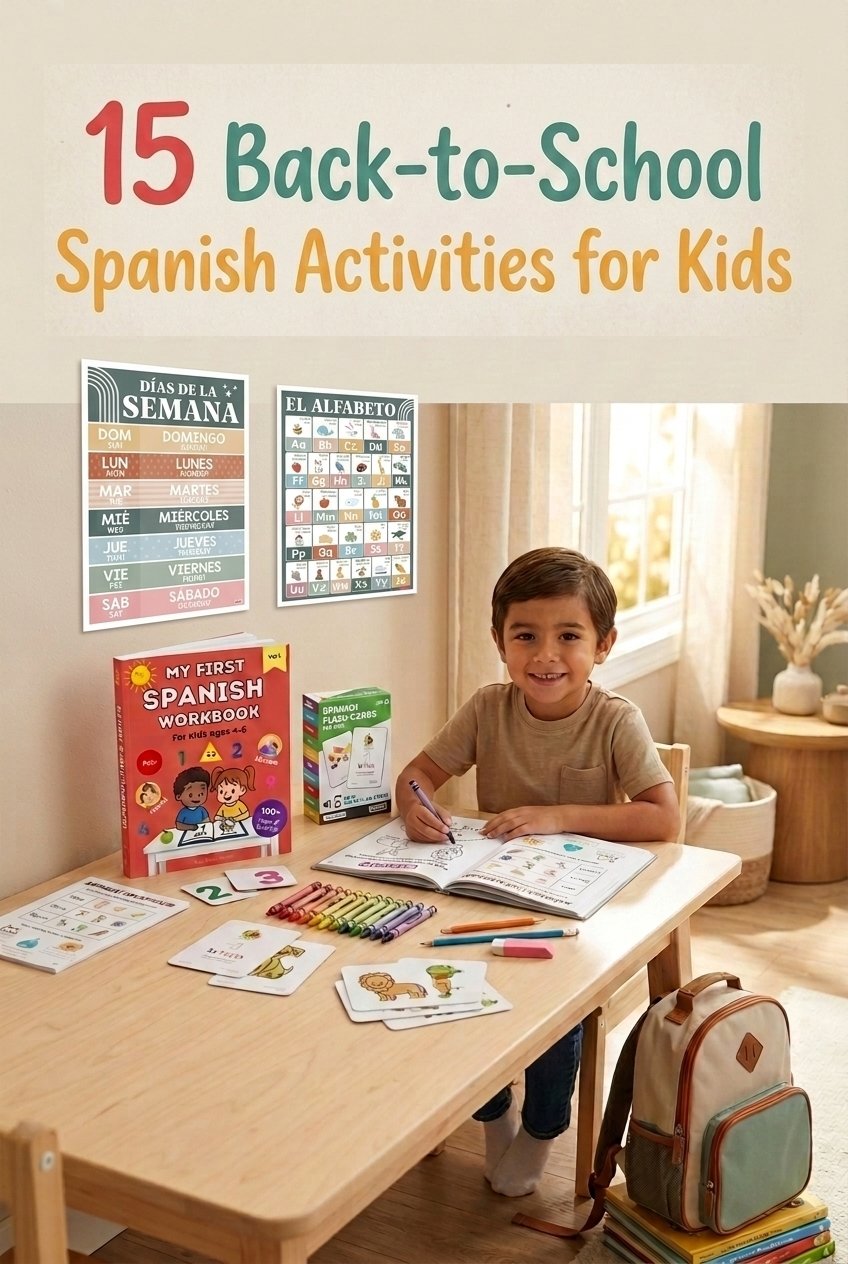
Spanish activities are a fun and simple way to help kids build language skills as they head back to school. Whether you're homeschooling, supplementing classroom learning, or simply want to introduce Spanish at home, the new school year is the perfect time to create a consistent learning routine.
We’ve been doing these simple Spanish activities all year, and they work! They will help your child practiceSpanish vocabulary, build confidence, and enjoy learning Spanish in a way that fits naturally into your family's day.
Disclosure: This post contains affiliate links that are at no additional cost to you, I may earn a small commission. All Products are linked in Blue.
1. Spanish Morning Basket
One of my favorite routines during the school season is creating a simple morning basket. Adding some fun Spanish activities gives kids a fun and consistent way to practice Spanish before the day gets busy.
A morning basket is also perfect for busy moms because everything your child needs is already in one place, making it easy to build Spanish learning into your daily routine.
Include Spanish flashcards, vocabulary cards, or picture cards.
Add a Spanish workbook, printable worksheet, or coloring page.
Keep crayons, pencils, and dry-erase markers inside the basket for quick and easy access.
I love using a Spanish morning basket because it removes the pressure of planning a new activity every day. Instead, your child can spend just 10–15 minutes practicing Spanish in a fun, low-stress way that builds confidence over time.
| ✨ Browse Spanish Morning Basket Essentials Here
2. Spanish Flashcards
Flashcards are one of the easiest Spanish activities to add to your morning basket or routine because they make learning new Spanish words quick, interactive, and fun.
This is perfect if your child is just beginning to learn Spanish or is reviewing familiar words, because they can be used almost anywhere. During breakfast, in the car, during homeschool breaks, or while waiting for dinner to cook.
Practice school-themed vocabulary like libro (book), lápiz (pencil), mochila (backpack), and maestra (teacher)
Review colors, numbers, animals, and common everyday words.
Turn flashcards into a matching game or a quick vocabulary challenge.
We usually keep a small set of Spanish flashcards in our morning basket because they make it easy to practice a few words each day without adding extra work to our schedule. Those small moments of consistent practice really add up over time.
| ✨ Shop Spanish Flashcards for Kids Here
3. Spanish Coloring Pages
Coloring pages are among the most engaging Spanish activities, especially for preschool and younger learners, because they combine creativity with vocabulary practice. They're also a wonderful low-prep activity for busy moms who want to make learning feel fun instead of overwhelming.
As kids color, they naturally begin connecting Spanish words with pictures, helping reinforce new vocabulary in a hands-on way.
Color pages featuring school supplies, colors, numbers, animals, or alphabet words
Practice saying each Spanish word out loud while coloring
Display finished pages on the refrigerator or homeschool wall for daily vocabulary review.
We usually print out Spanish coloring pages and place them in a menu so we can reuse them throughout the school year. It’s an easy way to reinforce specific Spanish words and phrases. Click here to see the menu we use to place them in.
| ✨ Grab these Free Spanish Coloring Pages for Kids Here
4. Spanish Matching Games
If you’re looking for a fun way to learn Spanish, matching games are one of those Spanish activities that make learning feel like play instead of schoolwork.
They're a great way to reinforce vocabulary while helping kids improve memory, and they are easy to set up and can be played again and again.
Match Spanish words with pictures of school supplies, animals, colors, or foods.
Pair Spanish vocabulary cards with their English translations
Create themed matching games for each week to introduce new vocabulary.
We love playing Spanish matching games at the end of our day. It's a simple, screen-free activity that keeps children engaged while building confidence one word at a time.
| ✨ Find Spanish Matching Games for Kids Here
5. Label School Supplies in Spanish
One of the simplest Spanish activities you can do during the back-to-school season is labeling everyday school supplies with their Spanish names. This easy activity helps children see and practice new vocabulary throughout the day without adding another lesson to your schedule.
The more often kids see these words, the more naturally they'll begin to remember and use them.
Label items like lápiz (pencil), libro (book), mochila (backpack), tijeras (scissors), and escritorio (desk)
Use printable labels or sticky notes that are easy to replace as your child learns new words.
Encourage your child to say each Spanish word before using the item.
We are looking forward to trying this out this year. Instead of setting aside extra time for Spanish, your child is naturally reviewing vocabulary every time they grab a pencil, open a book, or pack their backpack.
| ✨ Explore Spanish Labels Here
6. Read Spanish Books Together
Reading together is one of the most meaningful Spanish activities you can add to your routine. Even if you aren't fluent in Spanish, bilingual picture books are a wonderful way to introduce new vocabulary while creating a calm and enjoyable learning experience.
Reading just a few pages each day helps children hear Spanish used in context and builds confidence through repetition.
Choose bilingual English and Spanish picture books for beginning learners.
Pause to point out and repeat new Spanish words together.
Ask simple questions about the story using familiar Spanish vocabulary.
We enjoy reading together; it's a perfect way to build connection, and now I can do it while teaching my child Spanish. It's a cozy activity that helps children build vocabulary, improve listening skills, and develop a love for learning Spanish one story at a time.
| ✨ Browse Spanish Books for Kids Here
7. Build a Spanish Vocabulary Wall
Creating a Spanish vocabulary wall is one of those easy Spanish activities because it keeps new words visible and simple to set up. Instead of learning vocabulary once and forgetting it, kids see the words regularly, helping them build confidence through repetition.
You can create your own or purchase a Spanish vocabulary poster. It can grow as your child learns new topics throughout the year.
Add new Spanish words each week, such as school supplies, colors, numbers, or days of the week.
Include pictures alongside each word to help younger learners make connections.
Review a few vocabulary words together each morning or before starting lessons.
I love using a vocabulary wall because it turns an empty wall into an interactive learning space. It's a simple way to reinforce Spanish throughout the day and helps children naturally remember new words without feeling overwhelmed.
| ✨ Shop Spanish Vocabulary Wall Posters Here
8. Spanish Worksheets
Printable Spanish worksheets are one of the most practical Spanish activities during the school season because they give kids structured practice without requiring a lot of preparation. Worksheets make it easy to review Spanish vocabulary in a fun and engaging way.
They're also perfect for independent practice, morning work, or quiet time while you take care of other tasks.
Practice tracing, matching, coloring, and writing Spanish vocabulary words
Reinforce topics like school supplies, colors, numbers, animals, and greetings.
Keep completed worksheets in a Spanish binder to track your child's progress throughout the school year.
We also reuse our Spanish worksheets by placing them in an erasable menu. This way we can switch them out daily. They are also perfect to print and take them on the go.
| ✨ Grab these Spanish Worksheets for Kids Here
9. Play Spanish Bingo
Spanish Bingo is one of those Spanish activities that kids get excited to play again and again. It transforms vocabulary practice into a fun game while helping children review words they've already learned in a relaxed, low-pressure way.
It's also a great activity for homeschool co-ops, siblings, or family game nights.
Create Bingo cards using school supplies, colors, numbers, animals, or common classroom vocabulary.
Call out Spanish words and have kids find the matching picture or word.
Celebrate completed Bingo cards with stickers, stamps, or another simple reward.
Kids are so focused on winning the game that they don't even realize how much vocabulary they're reviewing. It's a simple way to make Spanish practice something they genuinely look forward to.
| ✨ Find Spanish Bingo Games for Kids Here
10. Spanish During Snack Time
Snack time is one of the easiest ways to fit in a Spanish activity because you're already spending time together. Instead of creating another lesson, you can naturally introduce Spanish vocabulary during a part of the day that's already built into your schedule.
These everyday conversations help children hear and use Spanish in a real-life setting, making new words easier to remember.
Count crackers, grapes, or apple slices in Spanish.
Practice food vocabulary like manzana (apple), plátano (banana), leche (milk), and agua (water)
Ask simple questions like "¿Qué color es?" (What color is it?) or "¿Cuántos tienes?" (How many do you have?)
Snack time is perfect for Spanish practice because it doesn't feel like another school assignment. It's a relaxed way to build vocabulary, encourage conversation, and show kids that Spanish can be part of everyday life, not just something they learn during lessons.
11. Spanish Songs
Music is one of the most enjoyable Spanish activities you can include in your daily routine because it helps children remember new words through rhythm, repetition, and movement. Even just a few minutes of singing each day can reinforce vocabulary while making learning feel fun.
Spanish songs are also a great way to transition between activities, start your homeschool morning, or having it play while you’re cooking dinner.
Sing songs about the alphabet, numbers, colors, and greetings.
Play Spanish music during morning routines, cleanup time, or car rides.
Encourage kids to sing along and repeat new vocabulary with confidence.
Spanish songs bring so much energy to our learning routine. Kids often remember words from a catchy song long before they remember them from a worksheet, making music a simple and effective way to build language skills.
| ✨ Explore Spanish Songs Here
12. Spanish Homework Station
Setting up a dedicated Spanish homework station is one of the smartest ways to continue practicing Spanish activities with your kids. You can set it up at the beginning of the school year.
Having all of your Spanish learning materials in one place makes it easier for kids to practice consistently without spending time searching for supplies.
Keep Spanish flashcards, worksheets, and workbooks together in one basket or organizer.
Store pencils, crayons, dry-erase markers, and learning supplies within easy reach
Add a small vocabulary chart or Spanish alphabet poster for quick daily review.
Having a Spanish homework station removes the stress of gathering materials every day. Everything is ready to go, making it easier to fit Spanish into even the busiest school schedule.
13. Practice Writing Spanish Words
Writing practice is one of the most effective Spanish activities because it helps children slow down, recognize new vocabulary, and build confidence one word at a time. As kids begin writing Spanish words themselves, they're reinforcing spelling, pronunciation, and word recognition all at once.
Perfect to also help children get back into the habit of practicing handwriting and building daily learning routines.
Trace and copy simple Spanish vocabulary words
Practice writing school-themed words like libro (book), lápiz (pencil), and mochila (backpack)
Use dry-erase boards or reusable handwriting pages for extra practice.
I love adding writing practice to our Spanish routine because it only takes a few minutes each day, but it helps reinforce everything we've already learned through songs, flashcards, and games.
| ✨ Browse Spanish Handwriting Resources Here
14. Spanish Review Game
One of the most rewarding Spanish activities is ending the week with a fun review game. Instead of introducing new vocabulary, this is a chance for kids to practice everything they've learned throughout the week in a relaxed and exciting way.
Review games help reinforce vocabulary, build confidence, and remind children that learning Spanish can be fun—not just another assignment.
Play a Spanish vocabulary race using flashcards.
Create a simple dice game with Spanish words or pictures.
Review colors, numbers, school supplies, greetings, and other vocabulary through a family game.
I am a big fan of ending the week with a Spanish review game because it gives kids a chance to celebrate what they've learned instead of focusing on what they still need to learn. It's a fun tradition that helps build confidence and keeps children excited to continue learning Spanish throughout the school year.
15. Spanish Workbook
A Spanish workbook is one of the best Spanish activities to include in your school year routine because it brings everything your child is learning together in one place. Instead of planning a different lesson every day, a workbook provides structured practice that helps kids build confidence step by step.
Whether your child is just beginning to learn Spanish or reviewing familiar vocabulary, spending a few minutes with a workbook each day can help reinforce what they've learned through games, songs, and other hands-on activities.
Complete a few pages each day instead of rushing through the workbook.
Review vocabulary using tracing, matching, coloring, and writing activities.
Use the workbook alongside flashcards and worksheets for extra practice.
We love our Spanish workbook and how it has everything categorized in sections from Spanish numbers, Spanish colors to Spanish animals, Spanish greetings, and more!
| ✨ Shop the Spanish Workbook for Kids Here
Learn Spanish Together at Home
If you're ready to take these Spanish activities a step further, my Spanish course for kids is designed to help families build a simple and consistent learning routine at home.
Created with busy moms in mind, the course includes easy-to-follow lessons, clear pronunciation, engaging activities, and step-by-step guidance that makes learning Spanish feel fun instead of overwhelming. Whether you're homeschooling or simply introducing Spanish after school, you'll have everything you need to teach your child with confidence.
Beginner-friendly Spanish lessons
Easy pronunciation practice
Interactive activities and games
Simple daily learning routine
Perfect for homeschool and after-school learning
I created this course to help parents feel confident teaching Spanish, even if they aren't fluent themselves. It's the perfect next step for families who want a structured, enjoyable way to make Spanish part of their everyday routine.
| ✨ Check out the Spanish Course for Kids here
📌 Save This for Later
If you found these Spanish activities helpful, don't forget to save this post so you can come back to it throughout the school year.
Building a second language doesn't have to be complicated. A few minutes of consistent practice each day can make a lasting difference, and these simple back-to-school activities are a great way to help your child grow in confidence while making Spanish a fun part of your family's routine.