15 Easy Spanish Words for Kids to Learn (Colors, Numbers & Greetings)
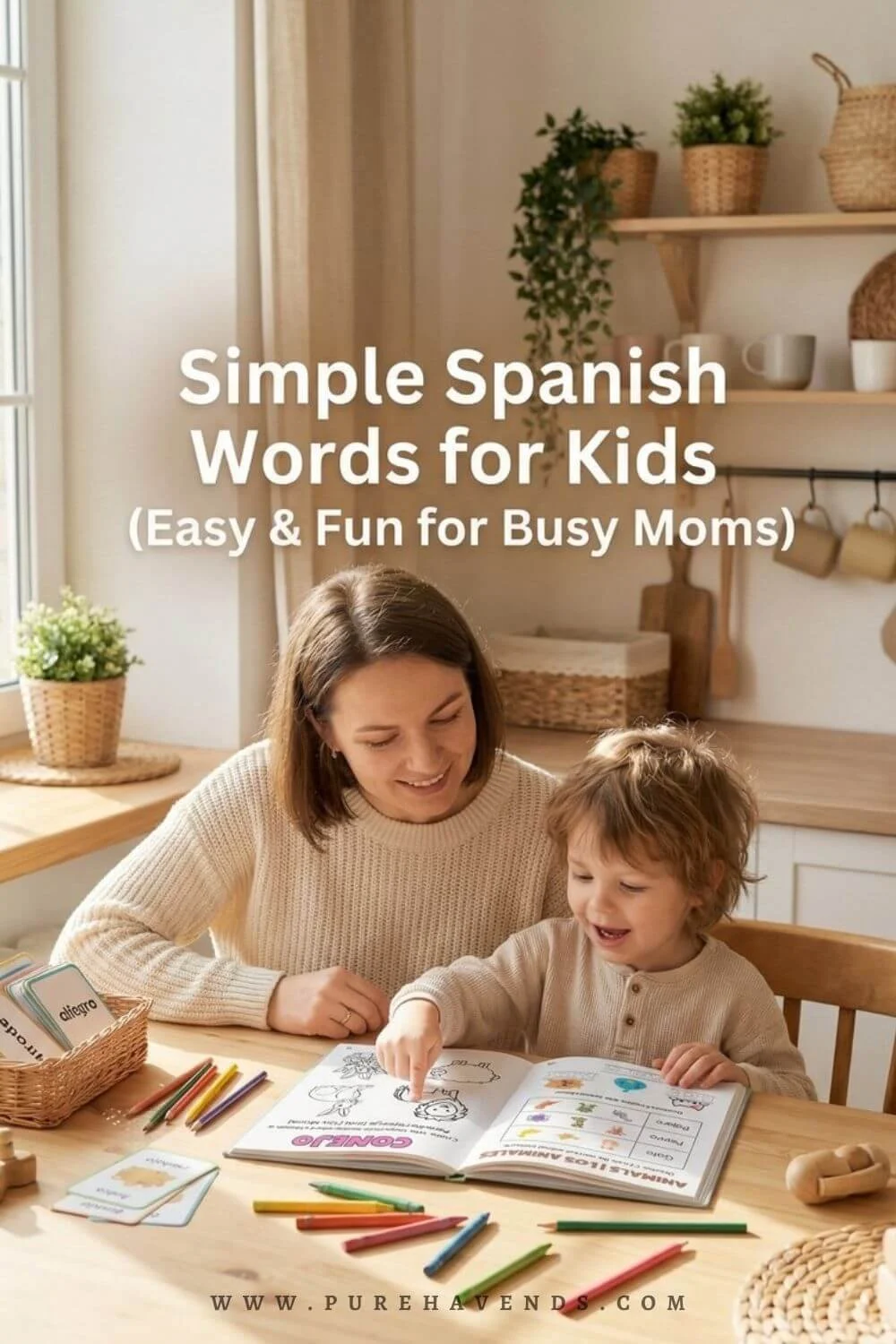
Teaching Spanish words for kids doesn’t have to be complicated, time-consuming, or perfect to be effective. Many moms want to introduce a second language but feel overwhelmed by the idea of adding one more thing to their already busy to-do list. The good news?.
Starting small with simple, everyday words is one of the best ways to build confidence for both you and your child.
We’ll focus on simple categories, such as colors, numbers, family members, and greetings, along with easy activities that you can easily fit into your daily routine.
Remember, you don’t need to be fluent, you just need to start!
The Colors in Spanish
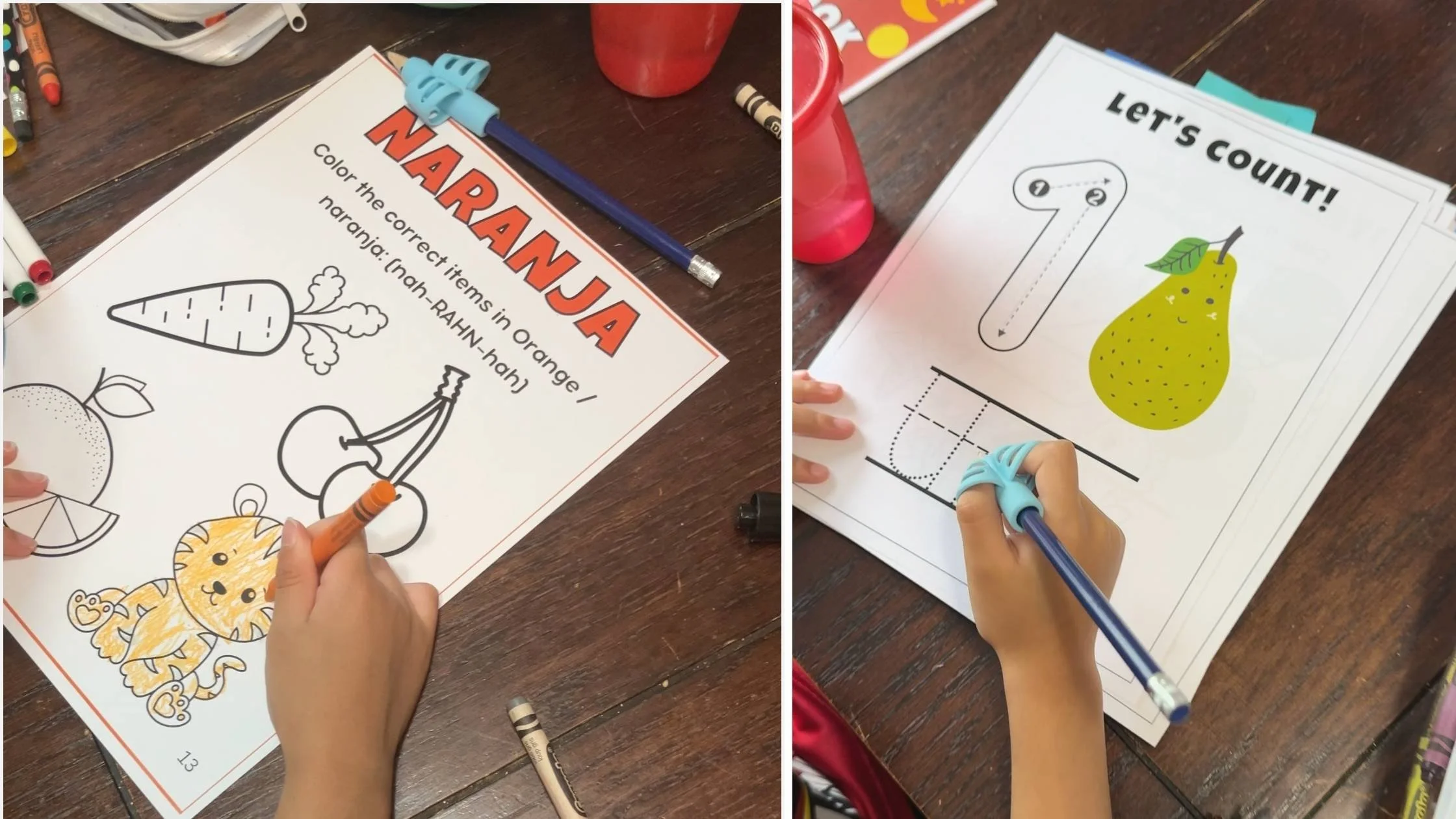
Teaching colors is one of the easiest and most natural ways to introduce Spanish words for kids because colors are already part of everyday life. You can practice during playtime, while getting dressed, coloring, or even walking at the park.
Here are a few you can start with:
Red — Rojo (ROH-ho)
Blue — Azul (ah-SOOL)
Yellow — Amarillo (ah-mah-REE-yo)
Green — Verde (VEHR-deh)
Easy Spanish Activity for Kids
Point out colors during playtime (“Look at the rojo ball!”)
Practice while coloring or painting.
Sort toys by color
Talk about their favorite color and practice it in Spanish.
Play “I spy” using Spanish color words.
You don’t have to worry about pronunciation being perfect. Kids learn through repetition and exposure, and learning together helps them feel seen and excited to learn more.
Spanish Numbers
Numbers are a great next step because kids already count throughout the day. So you can add this during play, snacks, steps, and bedtime routines. Start small with numbers 1 through 5 so it feels simple and achievable.
One — Uno (OO-no)
Two — Dos (Dose)
Three — Tres (Trehs)
Four — Cuatro (KWAH-tro)
Five — Cinco (SEEN-ko)’
Simple Numbers Spanish Activity
Count toys during cleanup.
Count steps while walking upstairs or outside.
Count snacks at snack time.
Count jumps during playtime.
Count books before bedtime.
Remember, repetition matters more than perfection. These everyday routines are perfect opportunities to reinforce Spanish words for kids without adding anything new to your schedule.
| Grab the Spanish Numbers Worksheet here
This printable helps kids visually connect numbers with words while practicing Spanish words for kids in a fun, low-pressure way.
Spanish Family
Teaching family vocabulary is a beautiful way to make learning feel relatable and fun. Kids love talking about the people they know best, and using these Spanish words for kids during everyday conversations helps them stick naturally.
Start with these:
Mom — Mamá (mah-MAH)
Dad — Papá (pah-PAH)
Sister — Hermana (ehr-MAH-nah)
Brother — Hermano (ehr-MAH-no)
Fun Family Spanish Activity
Point to family photos and say each member in Spanish
Practice during family time (“Go give mamá a hug!”)
Use during pretend play with dolls or action figures.
Draw a family chart and label each family member.
Practice introducing family members.
This doesn’t require a formal lesson and can create cute, memorable moments. These simple tips make learning Spanish words feel natural, instead of structured.
Spanish Greetings
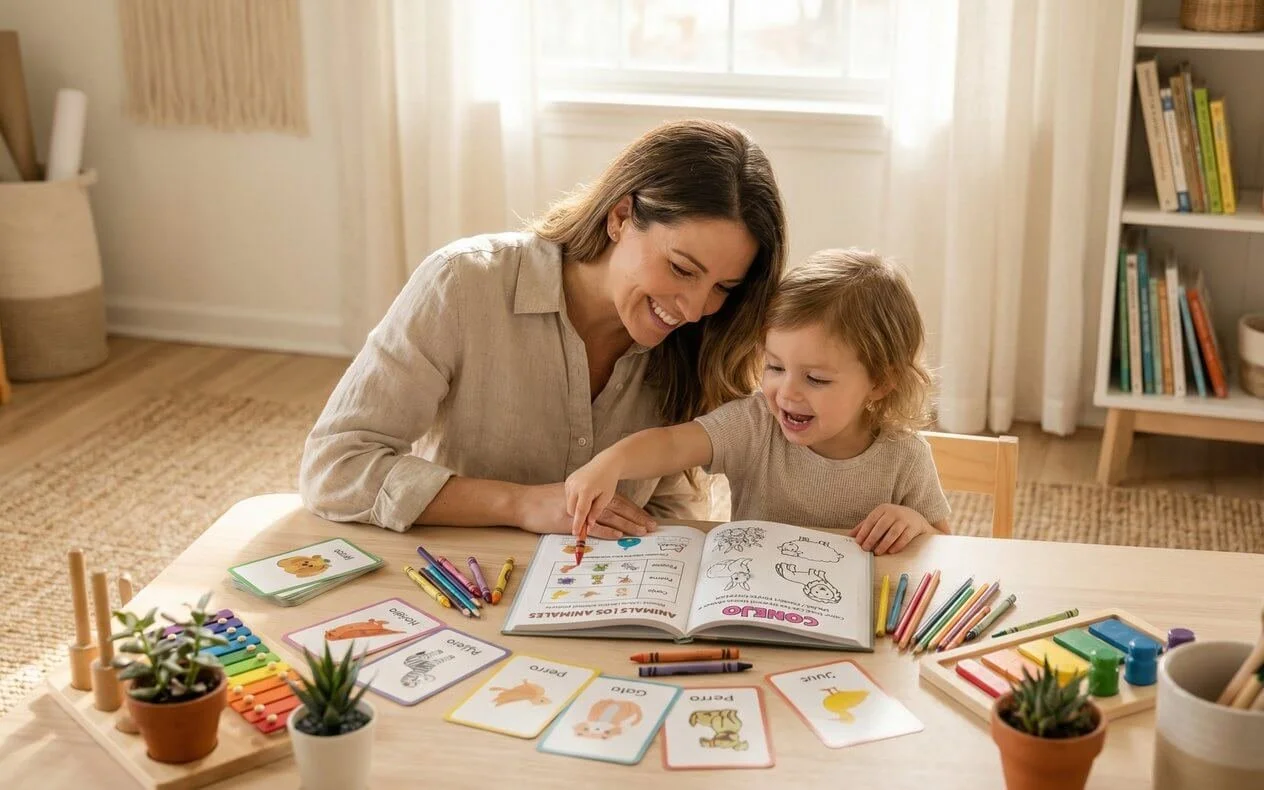
Greetings are often the first Spanish words for kids that feel natural to use because they fit easily into daily routines. From waking up in the morning to saying goodnight are simple phrases that can be used throughout the day.
Hi — Hola (OH-lah)
Goodbye — Adiós (ah-DYOHSS)
Good Morning — Buenos días (BWEH-nos DEE-ahs)
Good Night — Buenas noches (BWEH-nas NOH-ches)
Spanish Activity to practice greetings daily
Say “Buenos días” each morning
Practice saying “Hola” when greeting each other
Say “Adiós” when leaving the house.
Use “Buenas noches” during bedtime routine.
Practice greetings during pretend play.
These small daily habits make Spanish a part of your normal routine instead of something extra to remember. Kids love using greetings because they feel conversational and interactive, which helps reinforce learning naturally.
| Spanish Family & Greetings Worksheet Bundle
How Learning Spanish Is Beneficial for Kids
Learning Spanish isn’t just about learning a second language; it’s about opening doors to new opportunities, confidence, and cultural awareness. Even learning a few simple words can have a big impact over time because exposure is more important than perfection.
Builds strong brain skills -Kids who learn Spanish often develop stronger cognitive skills that support learning in other subjects too. Learning another language also helps improve memory,
Boosts confidence - When kids can say words in another language, they feel proud of themselves. Small wins, like saying “Hola” or counting in Spanish, can build confidence quickly.
Cultural awareness - Learning Spanish helps children understand and appreciate different cultures, traditions, and people, which builds empathy and curiosity about the world.
Prepares them for the future - Spanish is one of the most widely spoken languages in the world, so early exposure makes learning easier later in school and beyond.
Creates connection - Learning together creates meaningful bonding time between you and your child, and those moments matter just as much as the learning itself.
There are so many benefits to teaching kids Spanish at a young age, please click here for more research-based findings.
Conclusion: Spanish for kids Can Be Simple
Teaching Spanish doesn’t have to feel overwhelming, time-consuming, or complicated. The truth is, small daily moments like practicing colors, counting together, and saying simple greetings can make a big difference over time.
If you’re a busy mom, homeschool parent, or just starting your bilingual journey, remember this: you don’t need to be fluent to give your child the gift of a second language.
What matters most is consistency, encouragement, and making learning feel fun instead of stressful. Exposure matters more than perfection.
Want to make Learning Spanish even easier?
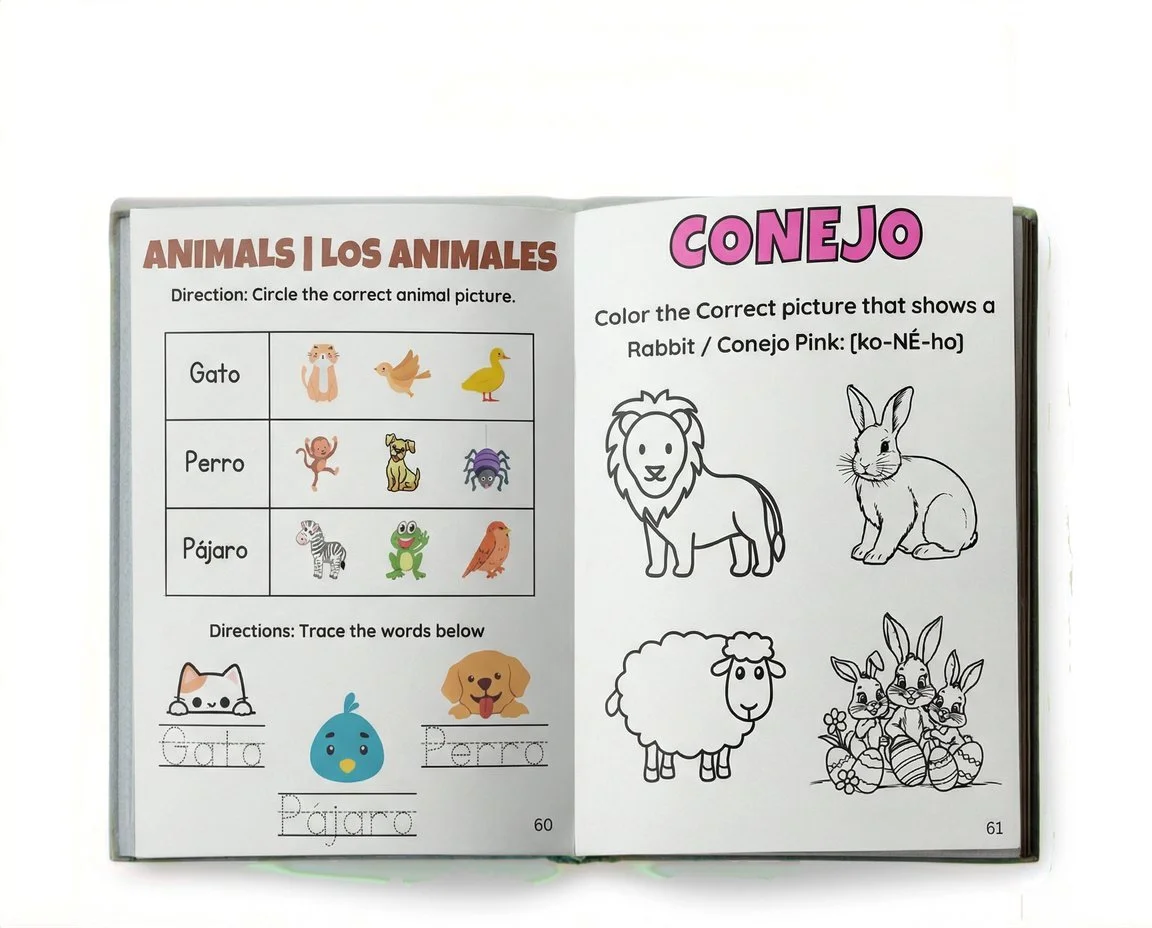
If you want a simple, structured way to keep practicing Spanish words for kids without having to plan everything yourself, my Spanish Workbook for Kids was created to help you do exactly that.
Inside, you’ll find fun, beginner-friendly activities covering:
Colors
Numbers
Shapes
Objects
Animals
Family
Greetings
It’s designed especially for young learners (ages 4–6) with simple, interactive pages that make learning feel like play. It’s perfect for busy moms who want an easy grab-and-go resource.
| Grab the Spanish Workbook for Kids Here (Amazon link)
Thank you for being here and for taking this step to help your child learn and grow 💛
If you try any of these activities, I’d love to hear which Spanish words your child is loving the most right now. Let me know in the comments!