10 Cozy and Affordable Homeschool Room Ideas for Small Spaces
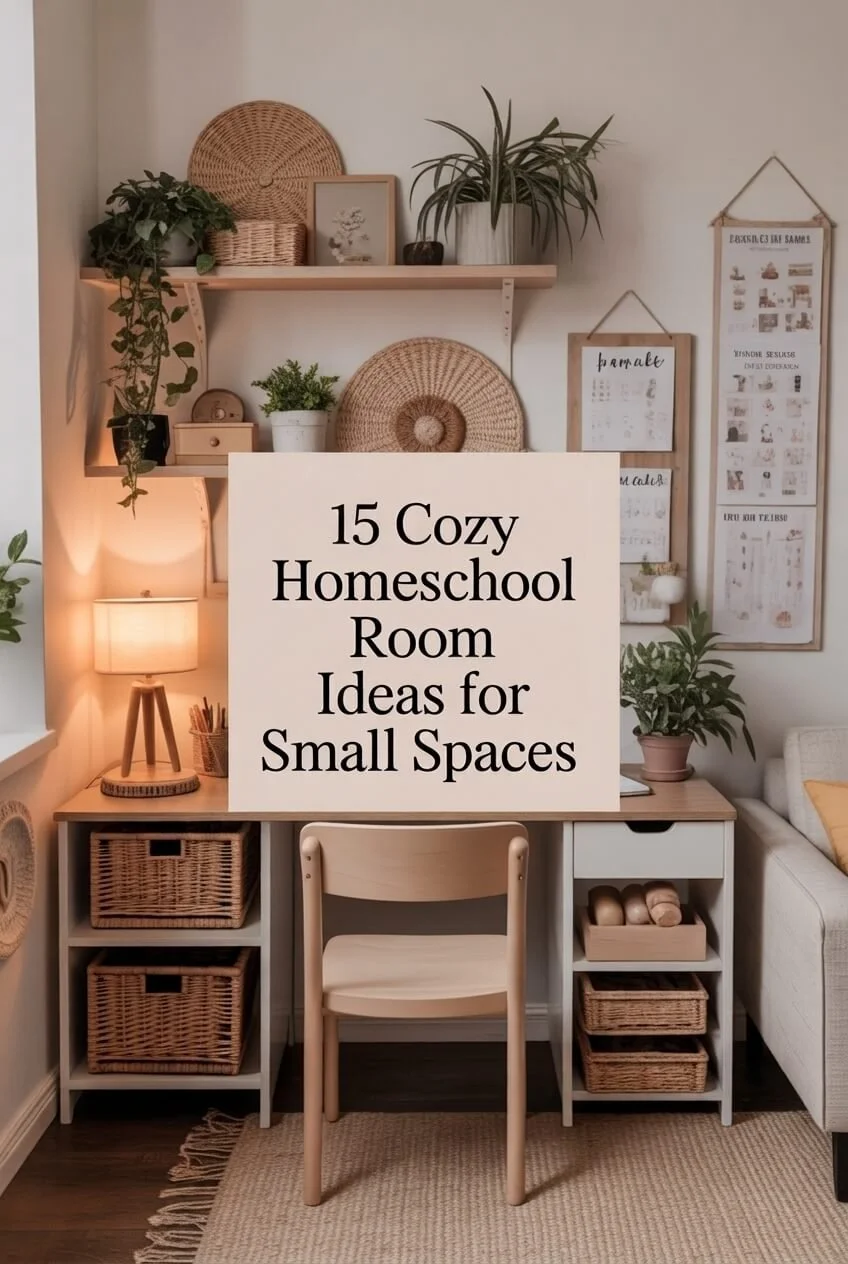
Creating cozy homeschool room ideas for small spaces doesn’t have to mean turning your entire home into a classroom.
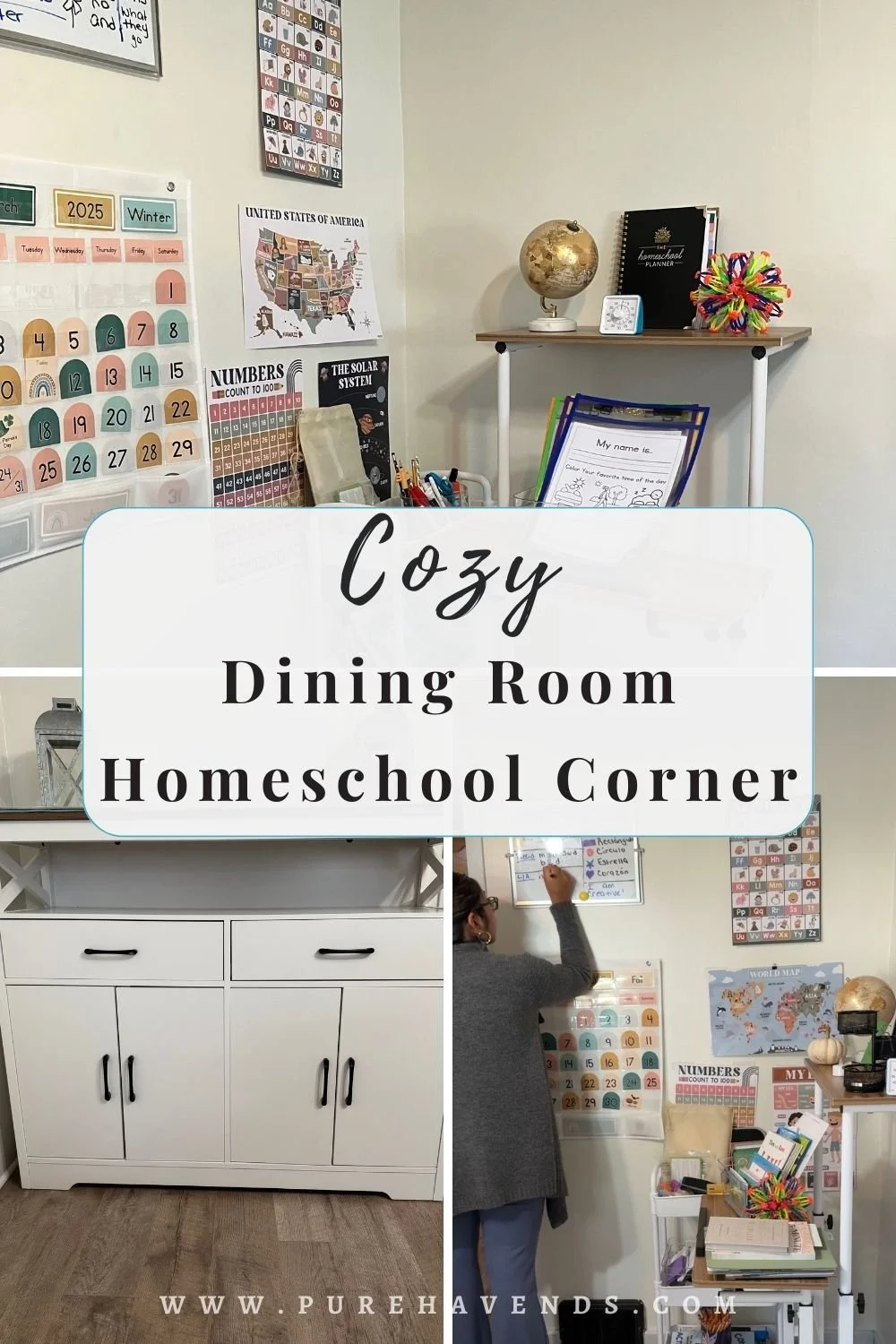
When I first started homeschooling, our homeschool space was just a small corner in our dining room but honestly, I’ve learned that simple and functional spaces usually work best for real everyday family life.
With a few cozy touches, smart organization ideas, and simple storage solutions, even the smallest homeschool space can feel calm, inviting, and easy to maintain.
Disclosure: This post contains affiliate links that are at no additional cost to you, I may earn a small commission. All Products are linked in Blue.
1. Cozy Homeschool Corner Ideas
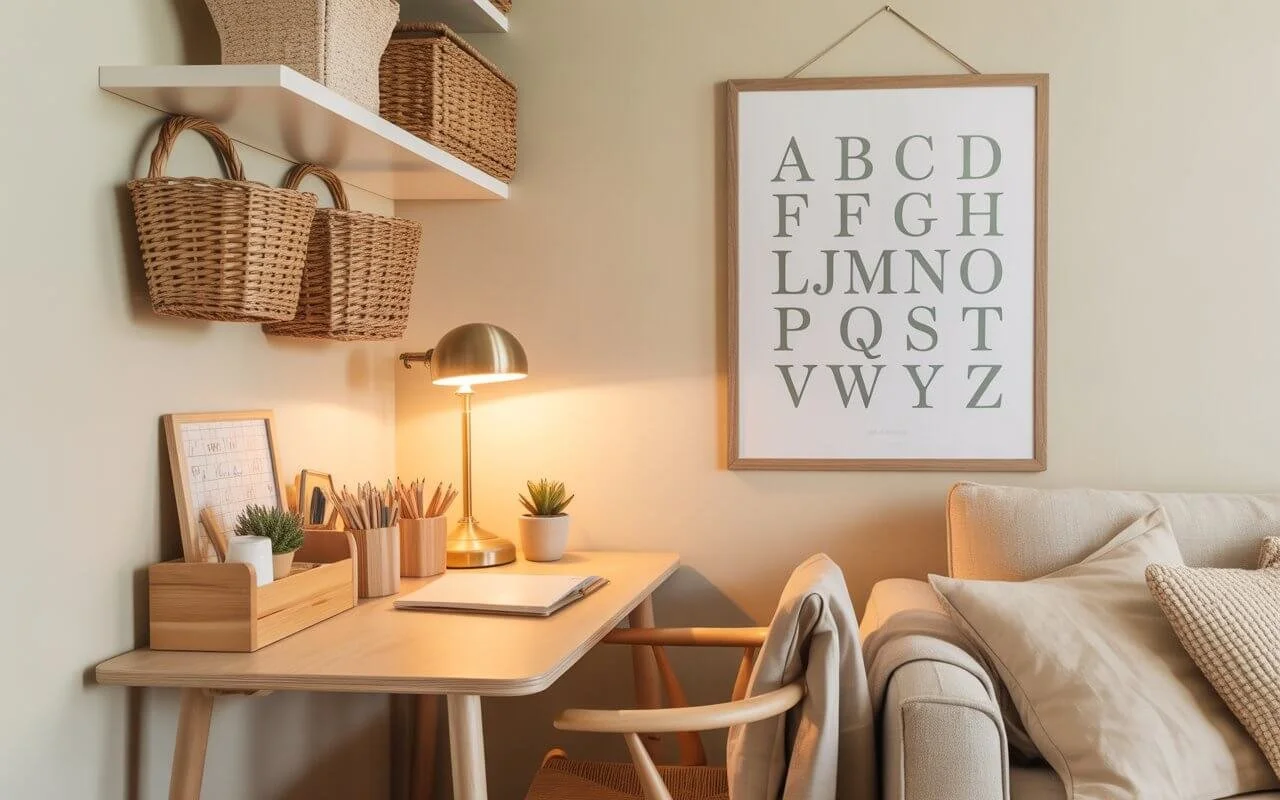
One of the best homeschool room ideas for small spaces is simply creating one designated learning corner in your home.
It doesn’t need to be a full room to feel intentional. Even a small corner can help homeschool days feel calmer and more organized.
A small desk or child-sized table
A simple basket system for supplies
One or two cozy touches like a lamp or small plant
I’ve noticed that kids focus so much better when they have a consistent space that feels warm, comfortable, and inviting.
| ✨ Browse Cozy Homeschool Corner Ideas Here
2. Homeschool Rolling Cart Organization
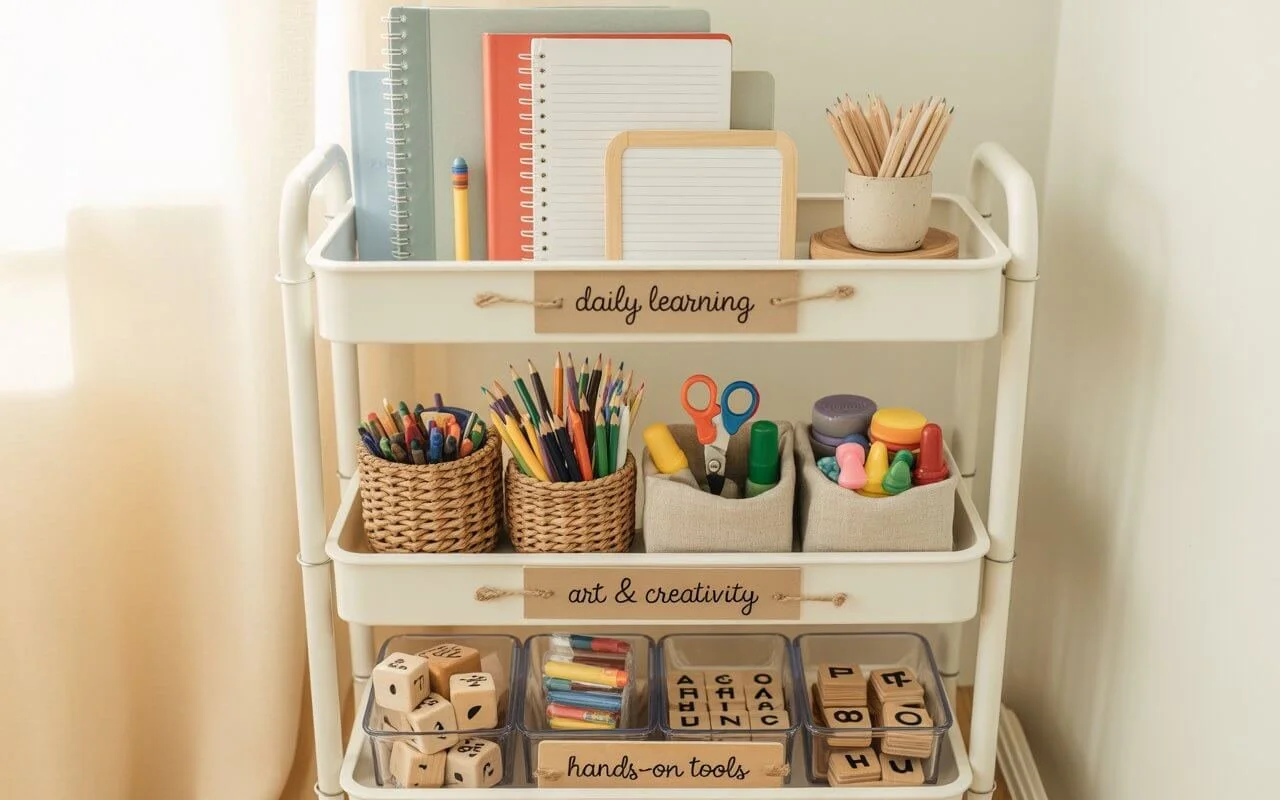
A rolling cart is honestly one of the most helpful things I’ve used while homeschooling in a small space.
It keeps everything organized, easy to access, and simple to clean up at the end of the day.
Top shelf for daily workbooks and pencils
Middle shelf for art supplies and crafts
Bottom shelf for learning games or manipulatives
I love that rolling carts make it easy to homeschool anywhere in the house without leaving supplies spread everywhere all day.
| ✨ Shop Homeschool Rolling Cart Ideas Here
3. Homeschool Wall Storage Ideas
When you’re working with a smaller homeschool setup, using vertical wall space can make a huge difference.
Simple wall storage helps keep your homeschool area organized without taking up valuable floor space.
Floating shelves for books and baskets
Display wall boards for schedules or artwork
Small wall cubbies for homeschool supplies
I love homeschool wall storage that still blends naturally with the rest of the home instead of making the space feel cluttered or overly classroom-like.
| ✨ Find Homeschool Wall Storage Ideas Here
4. Hanging File Folders for Homeschool Organization
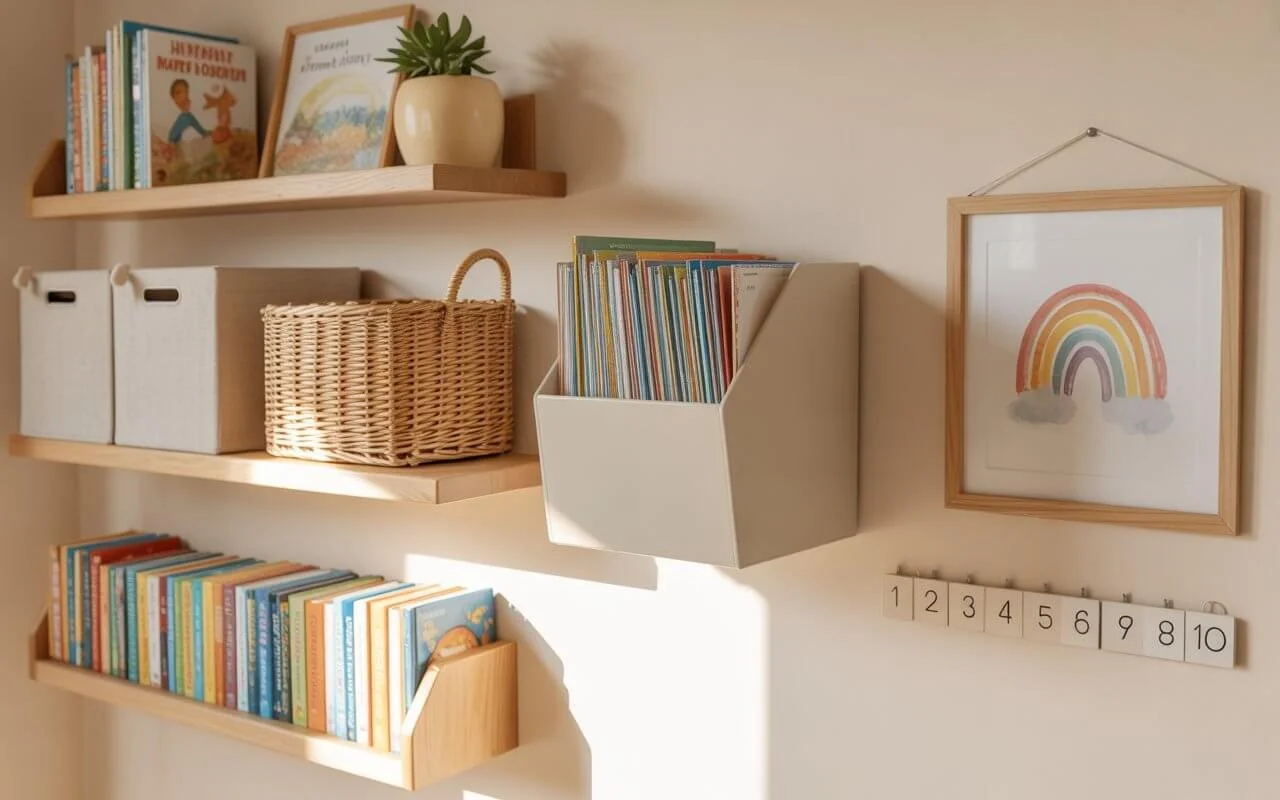
One thing that helped our homeschool room ideas feel less chaotic was creating a simple system for all the loose papers, worksheets, and lesson plans that seem to pile up everywhere.
Hanging file folders are such an easy way to keep everything organized without adding more clutter to your space.
Weekly lesson plans and worksheets
Library books or reading printables
Important papers that need quick access
I love using wall-mounted file holders because they keep things organized while still helping the homeschool area feel clean and minimal.
| ✨ Browse Hanging File Folder Organization Ideas Here
5. Art Frame Display Ideas
One of my favorite cozy homeschool room ideas is creating a simple art display for kids’ drawings and projects.
It makes the space feel personal and special without needing a lot of extra decor.
Wooden art frames for rotating artwork
Simple clipboards or hanging displays
Neutral frames that blend with your home decor
Kids absolutely love seeing their work displayed, and honestly, it adds so much warmth and personality to a homeschool space.
| ✨ Shop Kids Art Frame Display Ideas Here
6. Neutral Educational Charts
Educational visuals can still look beautiful in your home when you keep them simple and intentional.
I personally love using neutral educational charts because they help the homeschool area feel functional without making the room feel overstimulating.
Neutral alphabet or number charts
Simple maps or learning posters
Minimal learning visuals that blend into your decor
I’ve noticed that softer, neutral learning visuals help the homeschool space feel calmer while still keeping educational tools easy to access.
| ✨ Find Neutral Educational Chart Ideas Here
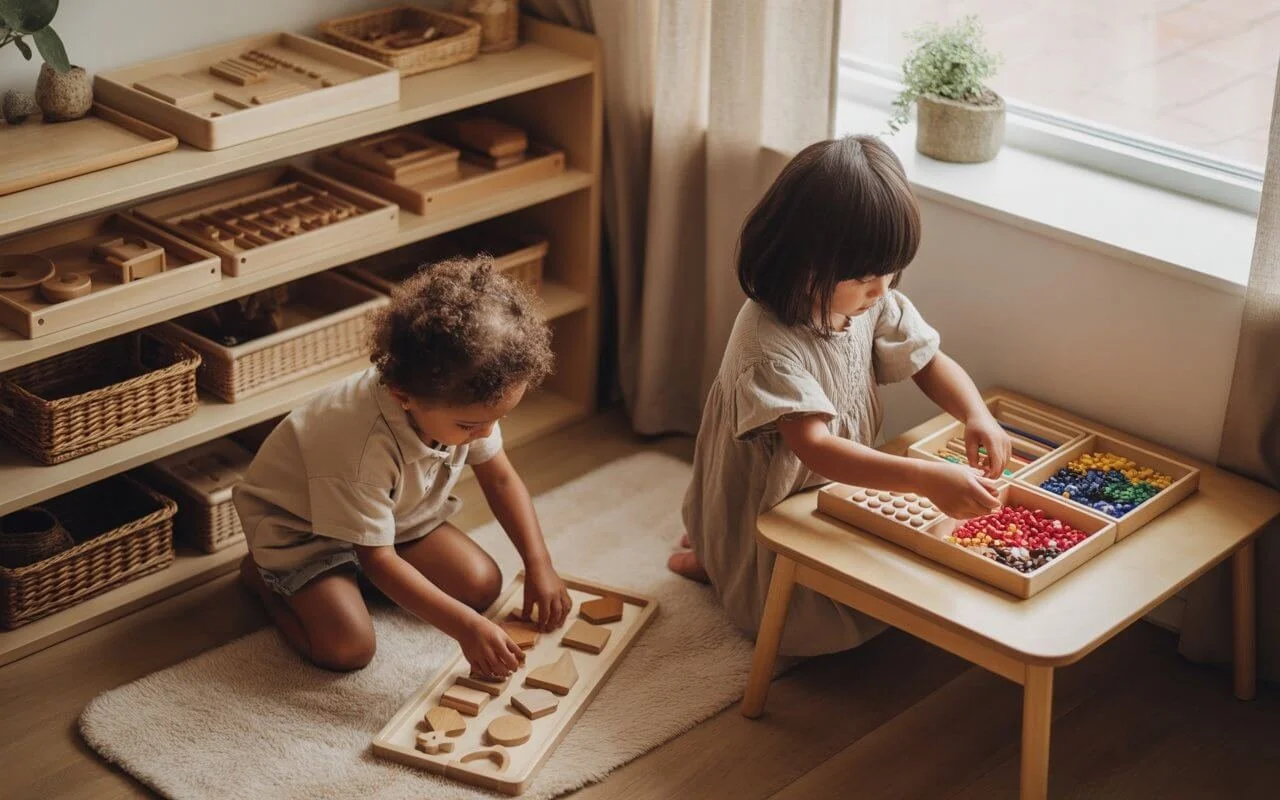
7. Montessori Learning Tray Ideas
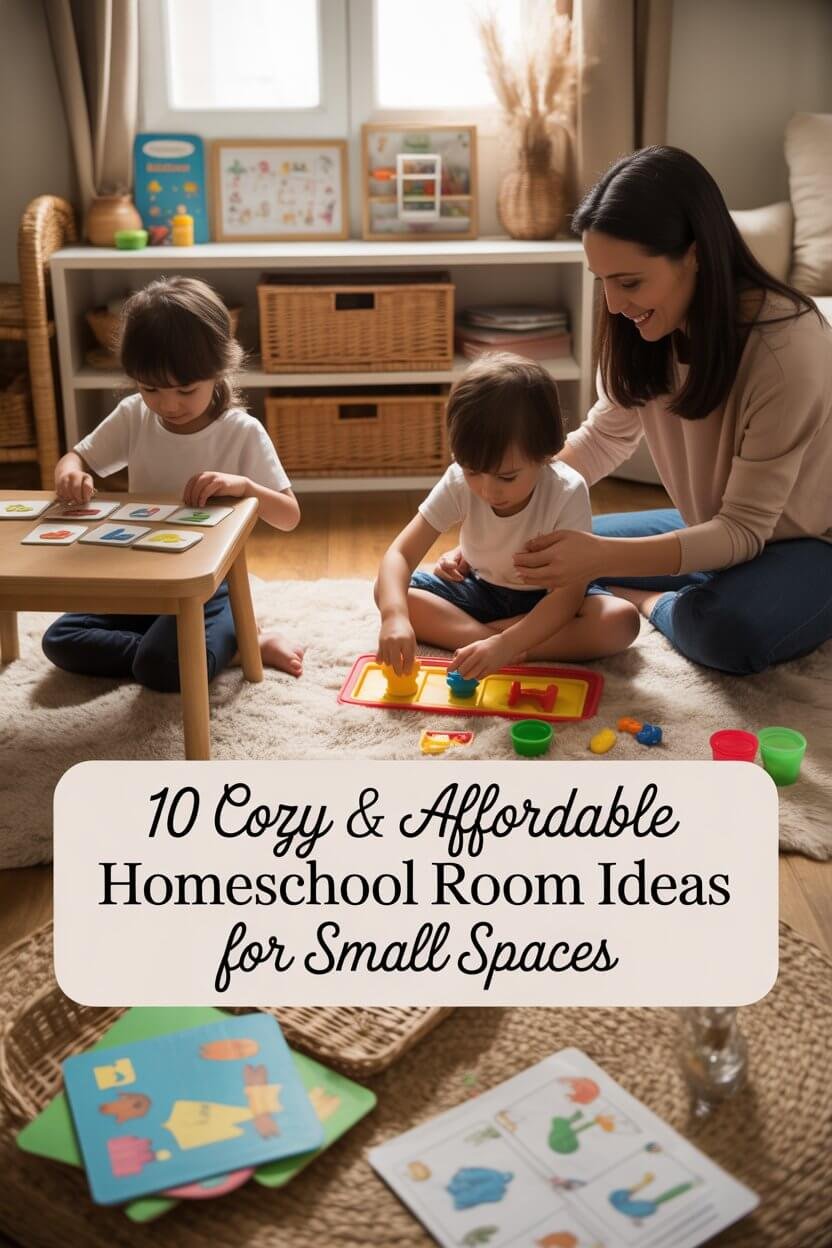
One of the simplest homeschool room ideas that helped my child become more independent was using Montessori learning trays.
Keeping one activity per tray makes learning feel less overwhelming and much easier for kids to manage on their own.
Letter matching or counting activities
Fine motor or sensory trays
Simple hands-on learning activities kids can grab independently
I love that learning trays keep homeschool organized while also encouraging kids to explore and learn at their own pace.
| ✨ Browse Montessori Learning Tray Ideas Here
8. Cozy Homeschool Seating
Comfortable seating can honestly make such a big difference during homeschool lessons—especially for younger kids who struggle sitting too long in one spot.
Creating cozy seating areas helps your homeschool space feel warm and inviting instead of overly structured.
Floor cushions, poufs, or bean bags
Child-sized chairs for better comfort and focus
Soft reading chairs or cozy corner seating
Even adding one cozy seat can completely change how your homeschool area feels and make learning time more enjoyable for kids.
| ✨ Find Cozy Homeschool Seating Ideas Here
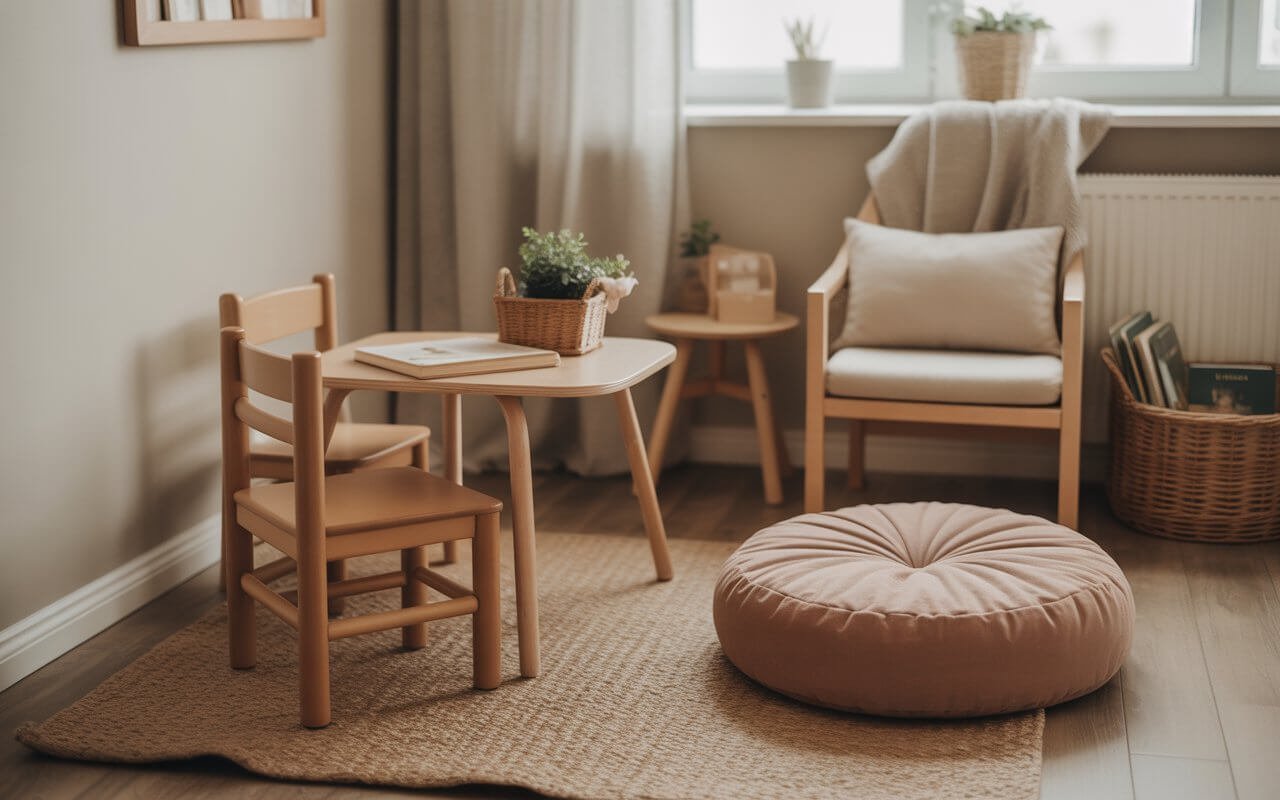
9. Minimal Homeschool Table Setup
One thing I’ve learned about small-space homeschool room ideas is that simple setups usually work best.
A clean and uncluttered homeschool table can help kids stay focused while also making your home feel calmer overall.
A simple table with minimal supplies
Small baskets or containers for daily essentials
Open table space for crafts, reading, and activities
I’ve noticed that when the table stays simple, homeschool feels less overwhelming for both moms and kids.
| ✨ Shop Minimal Homeschool Table Ideas Here
10. Small Space Homeschool Storage Ideas
One of the most important homeschool room ideas for small spaces is finding storage solutions that keep supplies organized without taking over your entire home.
I’ve found that simple storage systems make homeschool days feel so much less stressful and easier to clean up afterward.
Woven baskets or labeled bins
Cube organizers for books and supplies
Storage benches or cabinets that hide clutter
Small homeschool spaces work best when everything has a place without making the room feel crowded or overwhelming.
| ✨ Browse Small Space Homeschool Storage finds Here
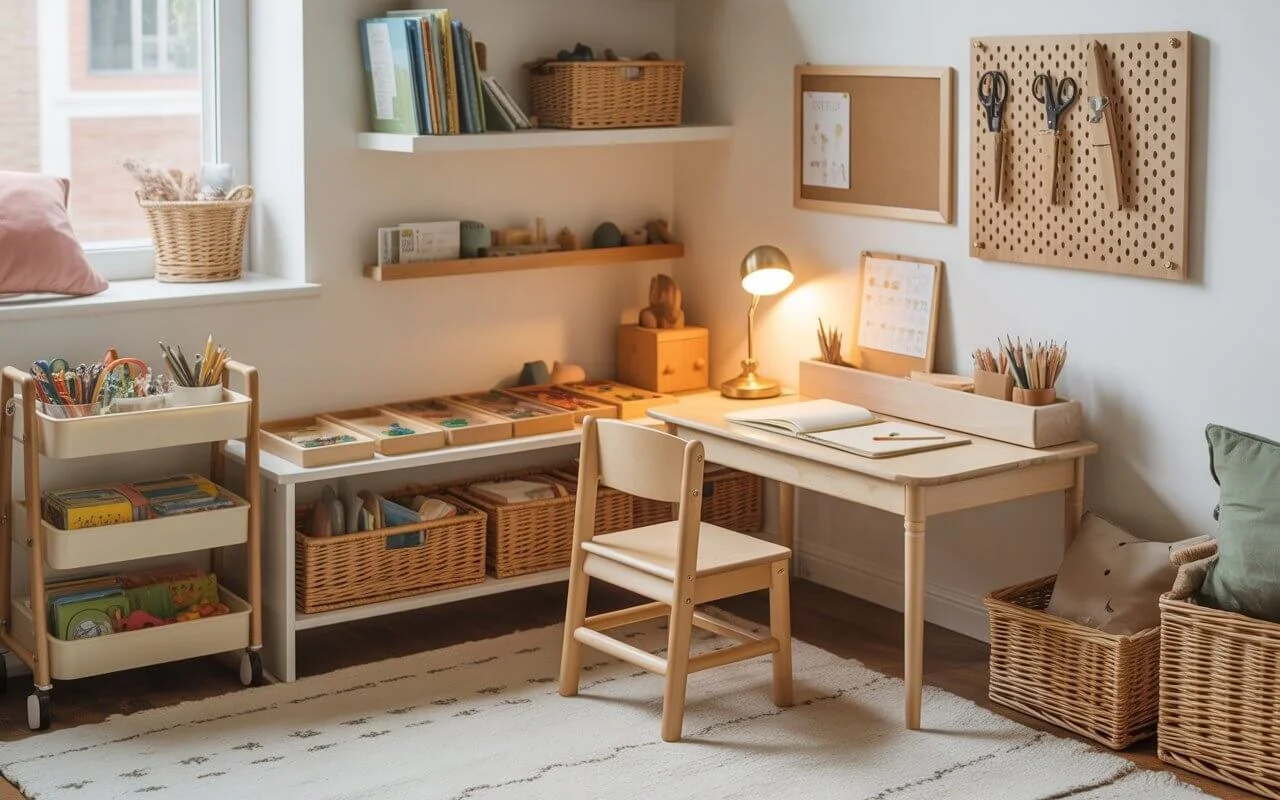
11. Homeschool Organization Bins and Labels
Simple organization systems can completely change how your homeschool space functions during busy days.
Labels and bins help kids know where things belong, which honestly makes cleanup so much easier.
Small labeled bins for supplies and activities
Drawer organizers for pencils, crayons, and scissors
Portable caddies for grab-and-go learning supplies
I love organization systems that are realistic to maintain because homeschool already comes with enough daily chaos on its own .
| ✨ Browse Homeschool Organization Ideas Here
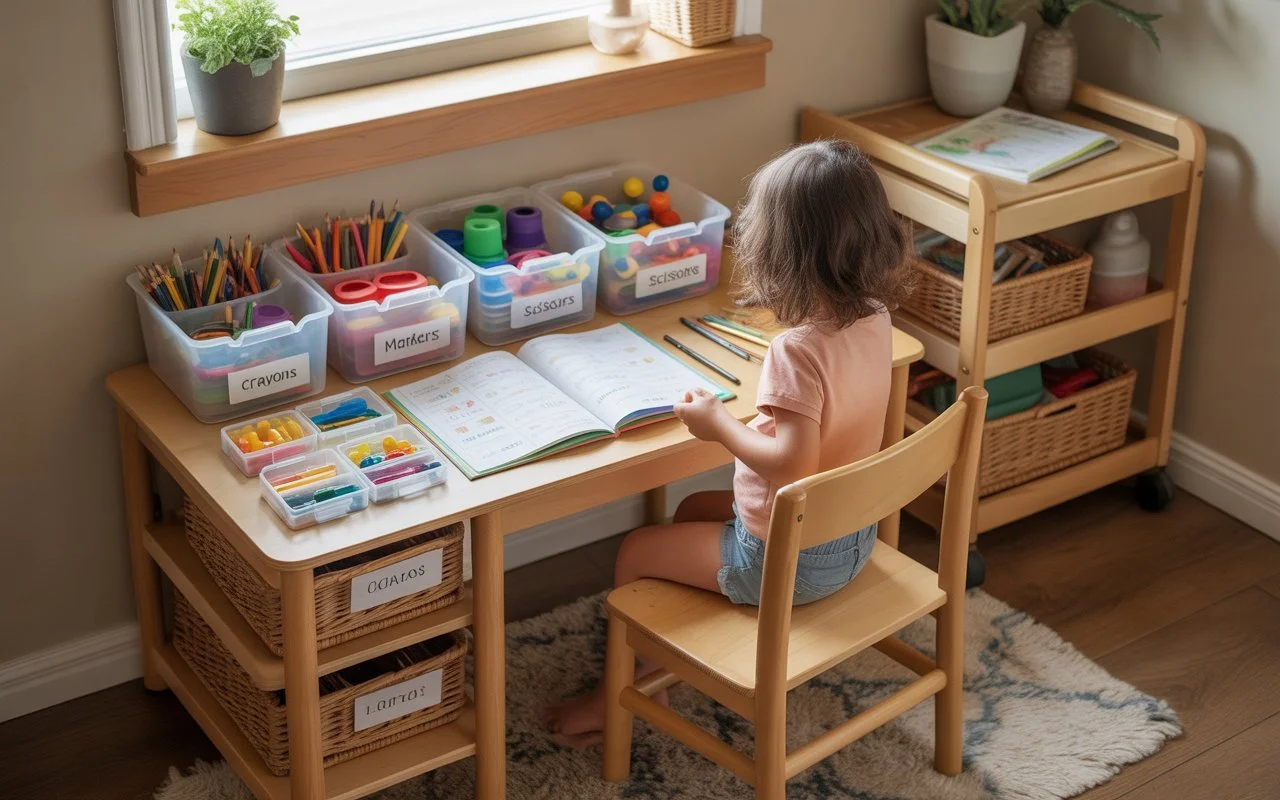
12. Flexible Seating for Kids
Flexible seating is one of those homeschool room ideas that can make learning feel much more comfortable and natural for kids, especially for children who don’t love sitting still for long periods of time.
Giving kids different seating options can help homeschool feel more relaxed and enjoyable throughout the day.
Wiggle cushions or wobble stools
Foldable chairs for smaller spaces
Floor seating for reading or quiet activities
I’ve noticed that when kids feel comfortable, lessons usually go smoother and everyone feels less frustrated.
| ✨ Browse Flexible Seating Ideas for Homeschool Here
13. Cozy Reading Nook Ideas
A cozy reading nook is one of my favorite homeschool room ideas because it creates a quiet little space where kids can slow down, relax, and enjoy books throughout the day.
It doesn’t have to be complicated or expensive to feel special.
Floor cushions, bean bags, or a small chair
A basket filled with favorite books
Soft blankets or warm lighting for a cozy feel
Even a tiny reading corner can make homeschool feel more peaceful and encourage kids to spend more time reading independently.
| ✨ Browse Cozy Homeschool Reading Nook Ideas Here
14. Homeschool Sideboard Storage
One of the best things I added to our homeschool setup was a simple sideboard cabinet to hide supplies and reduce visual clutter.
It helped our homeschool area feel more organized while still blending naturally into the rest of our home.
Cabinets for workbooks and learning supplies
Drawers for art materials and manipulatives
Closed storage that keeps the room feeling calm and tidy
I love homeschool storage that helps the house still feel like a home instead of a classroom taking over every space.
| ✨ Browse Homeschool Sideboard Storage Ideas Here
15. Simple Homeschool Spaces That Feel Peaceful
At the end of the day, the best homeschool room ideas are the ones that actually work for your family and everyday life.
Your homeschool space doesn’t need to look perfect to be meaningful, cozy, or functional for your kids.
Keep the space simple and easy to maintain
Focus on comfort instead of perfection
Create routines and systems that feel realistic for your family
I truly believe kids learn best in spaces that feel calm, welcoming, and full of warmth—not necessarily the most perfectly designed rooms.
Homeschool Spaces Don’t Have to Be Perfect
One thing I’ve learned over the years is that the best homeschool room ideas are usually the ones that feel simple, cozy, and realistic for everyday family life.
You don’t need a giant homeschool room, expensive furniture, or perfectly organized shelves to create a meaningful learning environment for your kids.
Sometimes a small corner, a cozy chair, a rolling cart, and a few intentional systems are more than enough to create a homeschool space that feels calm, functional, and full of warmth.
Find Cozy Homeschool Room Ideas
If you’re creating a homeschool space in a small room, dining room, playroom, or cozy corner of your home, I’ve saved my favorite homeschool room ideas, organization finds, furniture, storage solutions, and homeschool essentials all in one place.
✨ Shop my favorite homeschool room ideas and organization finds here.
📌 Save This for Later
If you’re planning your homeschool setup, save these homeschool room ideas so you can come back to them later.
Whether you’re homeschooling in a small space or simply trying to create a calmer learning environment at home, small simple changes can make such a big difference.