How Homeschool Moms Can Avoid Burnout - With a Simple Daily Routine
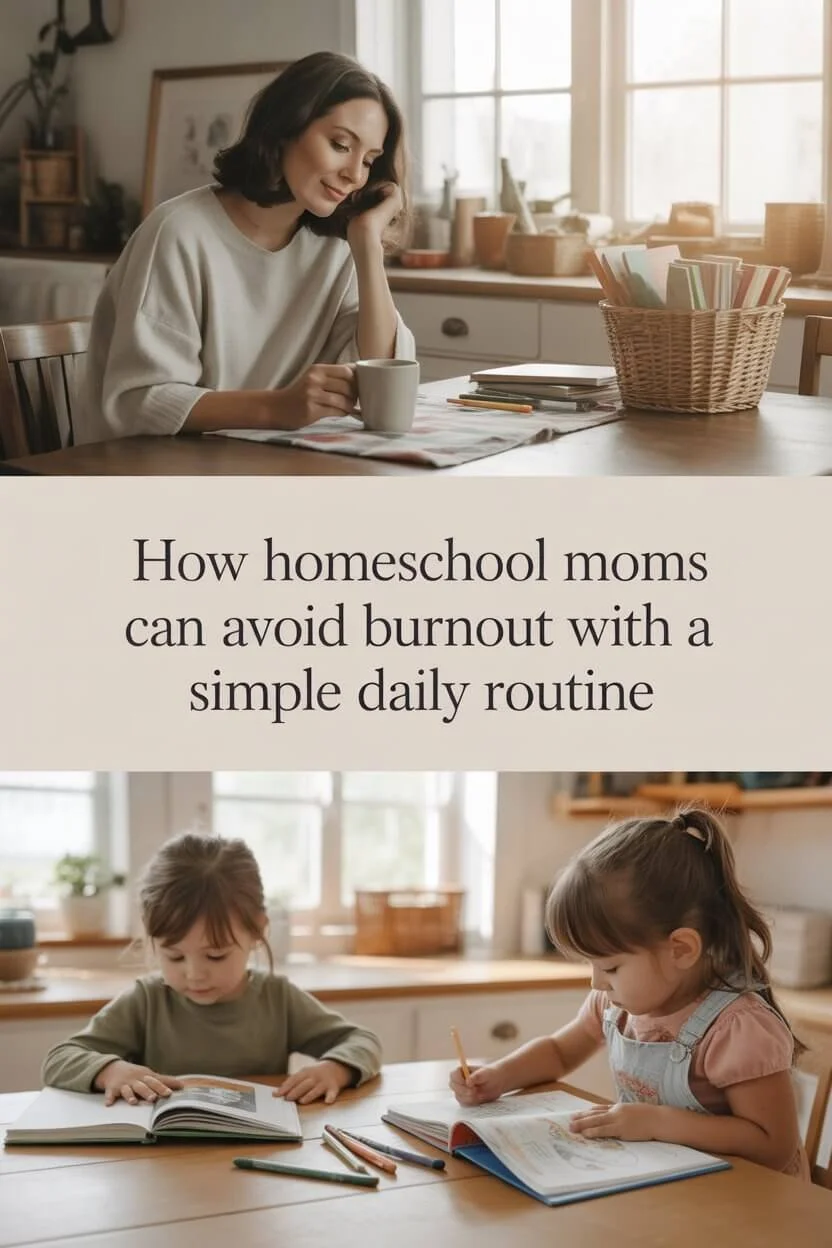
If you’re a homeschool mama reading this with a cup of coffee that’s already gone cold, looking for a simple homeschool morning routine, I see you.
Homeschool burnout doesn’t usually show up all at once. The early mornings, the lesson plans, the questions before you’ve even fully woken up, the feeling that your day starts before you’re ready.
It creeps in quietly, when mornings feel rushed, when you’re constantly pouring into your kids but rarely into yourself. And suddenly, even the things you once loved about homeschooling start to feel heavy.
I learned this the hard way: Burnout doesn’t mean you’re failing. It usually means your days need a little more structure and a lot more grace. Homeschooling isn’t just about schedules and printables.
It’s about creating a simple homeschool routine and rhythm that supports your kids and protects your peace.
Disclosure: This post contains affiliate links that are at no additional cost to you, I may earn a small commission. All Products are linked in Blue.
Why Homeschool Burnout Happens
Here’s something no one says out loud enough: You can love homeschooling your kids and still feel exhausted by it.
Burnout doesn’t mean you’re ungrateful. It doesn’t mean you chose the wrong path.
It usually means you’ve been doing too much, for too long, without enough support or structure.
Homeschool moms don’t just teach lessons.
We’re also:
Planning the homeschool schedule
Choosing curriculum
Managing supplies
Keeping track of progress
Adjusting for different learning styles
And somehow still feeding everyone.
When there’s no clear daily rhythm or homeschool routine, your brain never gets a break. Decision fatigue sets in fast.
You’re Pouring Into Everyone But Not Yourself
This one hits deep. Homeschool mamas give a lot, and when there’s no time built into your routine to rest, reflect, or recharge, it becomes unsustainable.
Burnout often isn’t about homeschooling itself. It’s about homeschooling without boundaries, support, or margin.
The good news? A few simple shifts, especially around your daily routine, can make homeschooling feel lighter, calmer, and more sustainable again.
Simple Homeschool Morning Routine
If there’s one thing that changed everything for us, it was this: simplifying our homeschool mornings.
No need to add more, wake up earlier, or create a color-coded schedule. Just creating a gentle, repeatable rhythm that everyone could count on.
Mornings are the foundation of your homeschool day.
When mornings feel calm:
Kids transition into learning more easily.
You feel more grounded and less reactive.
The rest of the day flows better, even when things don’t go perfectly.
When mornings feel chaotic, it’s like playing catch-up all day long. That’s why a predictable homeschool morning routine is one of the most powerful burnout-prevention tools you can have.
Simple Doesn’t Mean Rigid
This is important.
A routine is not a strict schedule with exact times. It’s a familiar order of events your family follows each day. Think of it like this, “First we do this… then we do that.” Instead of “We must start math at 8:37am or the day is ruined.”
This flexibility is especially helpful for homeschooling mamas juggling multiple kids of different ages or working from home.
Homeschool Morning Routine (Burnout-Free)
Let me be honest with you for a moment. This is not one of those “wake up at 5am, meditate, journal, prep lessons, and make a hot breakfast” routines.
Because that’s not real life for most homeschool mamas, especially if you’re teaching multiple kids, working, or running on very little sleep.
This is a real-life homeschool morning routine that prioritizes peace over perfection.
Step 1: A Soft Start (No Academics Yet)
Before anything academic happens, we focus on transitioning into the day.
This might look like:
Breakfast together (simple, nothing fancy)
Getting dressed and making beds
Light chores or independent play
Step 2: Homeschool Morning Basket
A morning basket homeschool routine gives structure without overwhelm, and it works beautifully for multiple ages.
Your morning basket might include:
Read-aloud books
Puzzles and simple STEM activities
Calendar or weather activities
Light handwriting or coloring
Spanish or language practice (perfect place for workbooks or printables)
Everything is organized in one basket or bin, eliminating scrambling and decision fatigue.
Here’s the link to everything we use in our morning basket.
Step 3: One Focused Learning Block
Instead of trying to do everything before lunch, we focus on one main learning block.
For example:
Math for one child
Reading or phonics for another
Quiet independent work for older kids
This is where having a homeschool schedule printable can be helpful, not to micromanage time, but to give you a visual flow. And if it doesn’t all get done? That’s okay. Tomorrow is another day.
Step 4: Built-In Breaks
Breaks are not a reward. They’re part of the routine.
After focused learning:
Snack time
Outdoor play
Movement breaks
Free play or creative time
This keeps kids engaged and prevents meltdowns, yours included.
Step 5: A Clear Ending Point
One of the biggest burnout triggers is feeling like homeschool never ends.
Decide ahead of time:
When your formal homeschool time ends
What happens next (lunch, quiet time, free play)
When there’s an ending point, your brain can finally rest, and you don’t spend the rest of the day wondering, “Should we be doing more?”
And most importantly, it’s sustainable.
A Homeschool Schedule That Supports You
Let’s clear something up right away: A homeschool schedule is not meant to control you. It’s meant to support you.
If schedules in the past have made you feel boxed in, behind, or like you’re constantly “failing,” this section is for you.
Block Scheduling
Instead of planning your day by exact times, try planning it in blocks.
For example:
Morning routine + morning basket
Focused learning block or one subject
Break / movement / play
Optional second learning block or second subject
End of school day
This gives you structure without pressure. If the morning runs long? You adjust. No guilt. No panic.
Build Around Your Energy and let go of the social media or Pinterest expectations.
This part is important, ask yourself:
When do you feel most focused?
When do your kids struggle the most?
When does burnout usually creep in?
Your schedule should support your real energy, not someone else’s highlight reel.
If mornings are hard? Start slower. If afternoons fall apart? End school earlier. That’s not failing, that’s wisdom. Leave White Space on Purpose. One of the biggest mistakes homeschool moms make is overscheduling.
Leave room for Catch-up days, Doctor appointments, Bad sleep nights, holidays, or emotional days (because they happen). White space is what keeps homeschool sustainable long-term.
The goal isn’t a perfect schedule. It’s a supportive one that helps you show up calm, present, and consistent.
Homeschool Must-Haves (That Prevent Burnout)
Let’s be honest for a second. Burnout doesn’t usually come from teaching. It comes from decision fatigue, clutter, and trying to remember everything while caring for everyone else.
That’s why having a few intentional homeschool must-haves can make your days feel lighter.
This isn’t about buying more. It’s about choosing tools and materials that support you.
2. Done for you Activities and Tools
Morning Basket - A morning basket creates a soft start to your day and helps everyone ease into learning, without pressure.
Done for you Curriculums - Curriculums that come with a teacher's guide, scheduled lesson plans, and exams. You don’t have to overthink it, just review the lesson for the day and get started.
AI - There’s no need to do everything on your own. I love using ChatGPT to help me add to my curriculum, or structure our curriculum so it fits our family's needs and routine.
These tools will help you feel more prepared, and that alone can reduce burnout so much.
Here’s ore on our top Curriculum choices this year.
3. Homeschool Planner (For Your Peace of Mind)
Trying to keep everything in your head is exhausting.
Homeschool planner - a planner designed to help you stay on track with lesson notes, Weekly goals, attendance tracking, and notes about what worked (and what didn’t)
Yearly Planner - If you prefer a yearly planner, this works too. Sometimes, keeping your homeschool plans separate from your daily plans is necessary.
Notes - Keeping a notebook, scrapbook book or something to help you jot down ideas that you want to remember about what’s working and what’s not, is super helpful.
This isn’t about perfection; it’s about clarity. When your plan is written down, your mind can finally rest.
Here are some homeschool planners, yearly planners, and notebooks you might want to consider.
4. Independent Learning Tools (So You’re Not “On” All Day)
Burnout often comes from feeling like you’re needed every single second.
Independent learning tools give you breathing room.
Educational Games - Using apps like Khan Academy, ABC Mouse, or the PBS app for kids. You can use these to supplement your current curriculum. It’s a guilt-free way to keep the kids learning, without being 100% present.
Self-paced lessons - Lessons that they can do on their own
Quiet activity kits - Simple Arts and crafts activities, Kiwi Co, Crunch labs or Lovevery.
This allows your kids to build confidence and allows you to drink your coffee while it’s still warm.
Most importantly, you need a “Done Is Enough” Mindset.
This one isn’t something you can buy, but it’s the most important must-have of all.
Remembering that you don’t need Perfect lessons, full checklists, or Pinterest-worthy days. Instead, you need consistency, connection, and grace.
Some days will be full. Some days will be quiet. But always remember that both count.
How Homeschool Moms Can Pour Back Into Themselves (Without Guilt)
Let me say this gently but clearly: You are not meant to run on empty. The truth is, taking care of yourself does not mean you’re taking away from your kids.
It actually means you’re showing up more present, more patient, and more grounded. Burnout doesn’t happen because homeschool moms “aren’t strong enough.”
It happens because we forget that we’re human too.
The good news?
Pouring back into yourself doesn’t have to be expensive, time-consuming, or another thing on your to-do list.
1. Create One Small Daily Ritual (5–15 Minutes Is Enough)
This isn’t about a full morning routine makeover. It’s about one intentional moment just for you.
Ideas that actually work in real life:
Quiet coffee before the kids wake up
A short devotional or journal page
Stretching or a 10-minute walk (walking is one of my favorites)
Reading a few pages of a book you enjoy
When you anchor your day with something just for you, everything feels a little lighter.
Here are some daily devotionals for moms, you might enjoy.
2. Build Margin Into Your Homeschool Schedule
A burnout-free homeschool schedule leaves room to breathe.
That might look like:
A lighter homeschool day once a week or a 4-day school week
One “loop” day with fun homeschool ideas instead of core subjects
Ending school earlier than planned (and being okay with it)
Rest is productive—even when it doesn’t look like school.
3. Schedule Weekly “You Time” (And Treat It Like an Appointment)
This is your permission slip. Block out time weekly for something that fills your cup:
A quiet solo errand
Coffee with a friend or at a cafe
A hobby you’ve been putting off
A peaceful reset afternoon at home
Put it on your calendar. Protect it like you would a doctor’s appointment. Because your well-being matters just as much.
4. Let Go of the Guilt (Your Kids Are Learning More Than You Think)
Your kids are learning:
Emotional regulation
Balance
What it looks like to honor personal limits
When they see you rest, reset, and care for yourself, they’re learning life skills, not missing out on education.
5. Stay Connected to Encouragement (You Don’t Have to Do This Alone)
Homeschooling can feel isolating, but it doesn’t have to be.
Surround yourself with:
Encouraging voices
Honest homeschool conversations
Simple routines that support your season
This is exactly why I share my journey, tips, and realistic routines with other homeschool mamas.
If you’d love weekly encouragement, gentle routines, homeschool tips, fun homeschool ideas, and behind-the-scenes real life, join my FREE Homeschool Newsletter.
Let’s Conclude with this: You Don’t Need to Do More, You Need Less Pressure
If there’s one thing I hope you take away from this, it’s this: You don’t need a perfect homeschool schedule, a flawless homeschool setup, or a packed routine to be doing a good job.
You need permission to slow down, simplify, and create rhythms that work for your family. A simple homeschool morning routine, a realistic homeschool schedule, and a few intentional moments of care for yourself can make all the difference.
Remember, you don’t have to do it alone. For more encouragement, realistic routines, homeschool must-haves, and a real-life look into my homeschool journey:
Join my FREE Homeschool Newsletter.
I share tips, resources, and the behind-the-scenes of how I manage it all (including my 9–5).
Also, if you’re looking for homeschool must-haves that actually make life easier, follow me on Benable, where I share all my favorite homeschool finds, no overwhelm, just tried-and-true tools I truly love.
You’re doing better than you think.
And you don’t have to do this alone 🤍