How to Raise Bilingual Kids When You Don't Speak Spanish Fluently
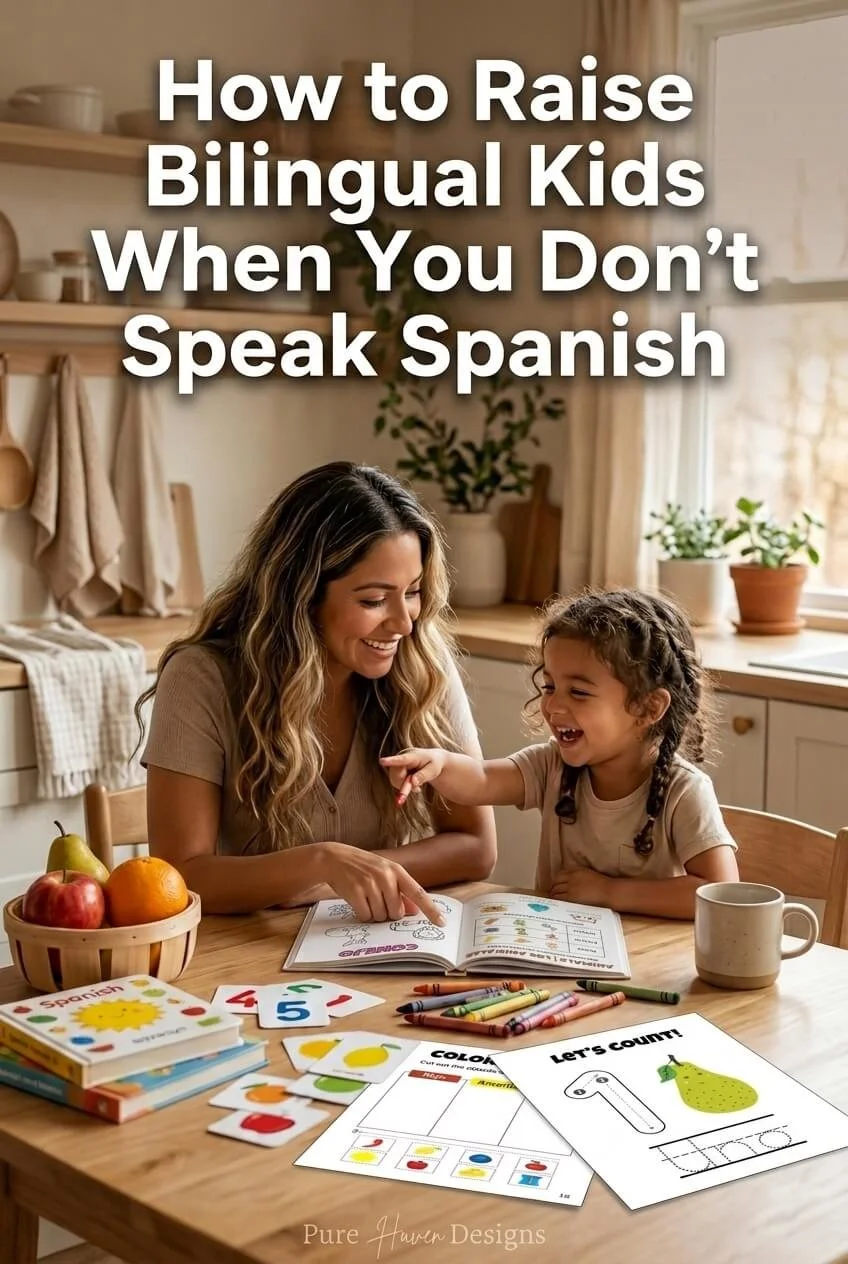
Bilingual kids can absolutely be raised in a Spanish-speaking home, even if you aren't fluent yourself. You don't need to know perfect Spanish or create complicated lessons to give your child meaningful exposure to the language or any language for that matter.
With a few simple routines, everyday activities, books, songs, and Spanish resources, you can make learning Spanish a natural part of your child's day even while you're learning alongside them.
Learning Spanish alongside your kids is what builds connection, and it's actually what helped my little one develop a love for learning a new language.
Disclosure: This post contains affiliate links that are at no additional cost to you, I may earn a small commission. All Products are linked in Blue.
1. You Don't Have to Be Fluent
One of the biggest misconceptions about raising bilingual kids is that you have to be fluent in Spanish yourself. You don't. You can start introducing Spanish at home even if you're still learning the language alongside your child.
Your child doesn't need hours of formal Spanish lessons every day or proper grammar. What matters most is creating regular opportunities to hear, practice, and enjoy the language.
Start with simple words and phrases you already know. Use them during meals, playtime, getting dressed, cleaning up, or your morning routine. Even a few Spanish words repeated consistently can become familiar to your child over time.
And don't worry about making mistakes.
Your child can learn alongside you. You can look up a word together, practice pronunciation, read a Spanish book, or listen to a Spanish song to learn something new.
The goal isn't to create a perfect Spanish-speaking environment overnight. The goal is to make Spanish a normal and enjoyable part of your child's everyday life. 💛
2. Start With a Small Spanish Routine
When your goal is to raise bilingual kids, you don't have to dedicate an entire hour every day to Spanish. In fact, starting with just 5–10 minutes a day can make learning feel much more manageable for both you and your child. This is exactly what we do.
The key is to choose a small part of your day where Spanish naturally fits into your routine.
You could start with a simple morning routine:
Good morning: Buenos días
How are you? ¿Cómo estás?
Let's eat: Vamos a comer
Let's get dressed: Vamos a vestirnos
Where are your shoes? ¿Dónde están tus zapatos?
You can also choose a specific time each day for Spanish, such as reading a Spanish book before bed, practicing vocabulary after breakfast, or listening to a Spanish song during cleanup.
Don't worry about adding too much at once. Pick one routine and a few simple words or phrases, then repeat them consistently.
As your child becomes comfortable with those words, gradually introduce new ones.
The goal isn't to turn your home into a Spanish classroom. It's to make Spanish part of your child's everyday routine, so they begin hearing and using the language naturally.
3. Use Spanish During Everyday Activities
Start adding Spanish into the things you're already doing together. You don't need to create a separate lesson every time you want your child to practice Spanish. Everyday routines can become simple language-learning opportunities.
Try adding Spanish to activities like:
🍳 Cooking: Name ingredients, colors, and kitchen items in Spanish.
🧸 Playtime: Practice simple phrases like vamos a jugar (let's play) or es tu turno (it's your turn).
👕 Getting dressed: Name clothing items such as camisa (shirt), pantalones (pants), and zapatos (shoes).
🛒 Grocery shopping: Practice fruits, vegetables, numbers, and colors while you're at the store.
🛁 Bath time: Introduce simple words for body parts, toys, and actions.
🧹 Cleaning up: Use words like it’s time to limpiar (clean)
You don't have to translate every single thing you say. Start with a few words or phrases that you feel comfortable using and repeat them often. The more naturally Spanish becomes part of your family's everyday routines, the less it feels like another subject your child has to "study." You're simply creating more opportunities for your child to hear and use Spanish throughout the day. 💛
4. Read Spanish Books Together
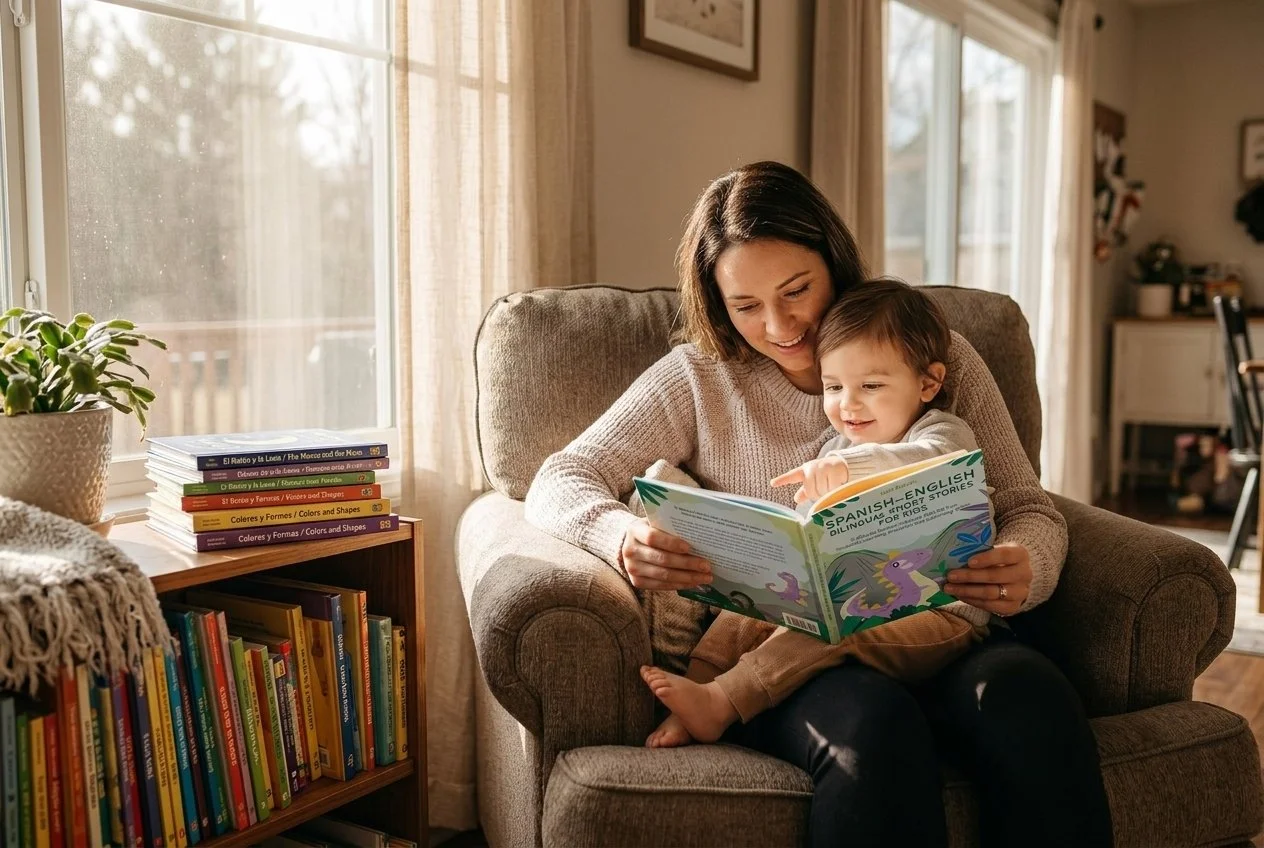
Reading together is one of the simplest ways to expose bilingual kids to Spanish while spending quality time together. You don't need to read an entire book in Spanish every day. Even a few pages can help your child hear new vocabulary, sentence patterns, and pronunciation in context.
If you're just getting started, choose books with:
Simple, repetitive sentences
Colorful pictures that help explain the story
Familiar topics your child already enjoys
Spanish-English bilingual text if you need extra support
You can also make reading more interactive by pointing to pictures and naming objects in Spanish, asking your child simple questions, or repeating new words throughout the story.
And don't worry if you don't know every word.
You can read the English version first, listen to the Spanish pronunciation together, or look up unfamiliar words as you go. The goal is to make Spanish reading something your child associates with connection and fun, not pressure.
Even reading one Spanish book a few times a week can become a meaningful part of your family's routine. Over time, those repeated stories and familiar words can help Spanish feel more natural to your child.
| Find more bilingual books for kids here
5. Listen to Spanish Songs and Music
Music is one of the easiest ways to make Spanish part of your child's day without making it feel like a lesson. Spanish songs provide repeated exposure to vocabulary, pronunciation, rhythm, and everyday phrases; kids can enjoy them while they're playing, dancing, or riding in the car.
Try adding Spanish music to routines you already have:
Play a Spanish song during breakfast or while getting ready.
Listen to Spanish children's songs in the car.
Have a short Spanish dance party during the day.
Play Spanish music while cleaning up toys or doing chores.
Choose a calm Spanish song as part of your bedtime routine.
Look for children's songs with simple, repetitive lyrics that your child can easily recognize and eventually sing along with. You can also choose songs that reinforce topics your child is already learning, such as numbers, colors, animals, body parts, or the days of the week.
Remember you don't have to understand every word of every song. The goal is to give your child more opportunities to hear Spanish and associate the language with something enjoyable.
You might be surprised by how quickly children pick up repeated words and phrases when they're hearing them through music. So turn up the Spanish songs, dance together, and let your child have fun with the language.
6. Teach Everyday Spanish Phrases
One of the best ways to raise bilingual kids is to give them simple Spanish phrases they can actually use throughout the day. Instead of focusing only on vocabulary words, teach phrases that naturally fit into your family's routines.
Start with phrases your child is likely to hear and use often:
Buenos días — Good morning
¿Cómo estás? — How are you?
Tengo hambre — I'm hungry
Tengo sed — I'm thirsty
Vamos a comer — Let's eat
Vamos a jugar — Let's play
¿Dónde está...? — Where is...?
Es tu turno — It's your turn
Vamos a limpiar — Let's clean
Buenas noches — Good night
Te quiero — I love you
Don't feel like you need to introduce all of these at once. Choose two or three phrases that fit naturally into your day and use them consistently.
For example, instead of always saying "Good morning," try saying "Buenos días" when your child wakes up. Eventually, that phrase can become a familiar part of your morning routine.
As your child becomes comfortable, introduce a few more phrases and encourage them to respond in Spanish when they're ready.
Remember, the goal isn't to have your child memorize a long vocabulary list. It's to help Spanish become a language they hear, understand, and actually use in everyday life. Start very small; use one word for the entire week, and that’s enough.
| Shop Simple Bilingual Spanish Greeting Worksheets Here
7. Use Spanish Games and Activities
Learning Spanish doesn't have to feel like another school subject. When you're raising bilingual kids, games and hands-on activities can make Spanish practice feel natural, playful, and something your child actually looks forward to.
You can turn almost any activity into a simple Spanish learning opportunity:
🎨 Coloring: Practice colors and simple Spanish vocabulary while your child colors.
🧩 Matching games: Match Spanish words with pictures or objects.
🔢 Counting games: Count toys, blocks, snacks, or steps together in Spanish.
🐶 Animal games: Practice animal names and the sounds they make.
🎲 Card games: Introduce simple Spanish colors and numbers. We love using the game UNO for this one.
✂️ Hands-on activities: Use crafts, cutting activities, puzzles, and worksheets to reinforce new vocabulary.
You can also create a simple Spanish activity basket with coloring pages, flashcards, puzzles, books, and worksheets that your child can use throughout the week.
The goal isn't to make every activity educational. Sometimes simply playing together while using a few Spanish words is enough.
When children connect Spanish with play, creativity, and time with you, the language becomes something they enjoy, not something they feel pressured to learn.
8. Make Spanish Part of Your Child's Environment
If you want to raise bilingual kids, one of the easiest things you can do is surround your child with Spanish throughout the day. Your child doesn't have to be actively studying for Spanish exposure to happen. The more often they hear and see the language, the more familiar it can become.
You can create a Spanish-friendly environment in simple ways:
Keep Spanish or bilingual books where your child can easily reach them.
Play Spanish children's music during everyday routines.
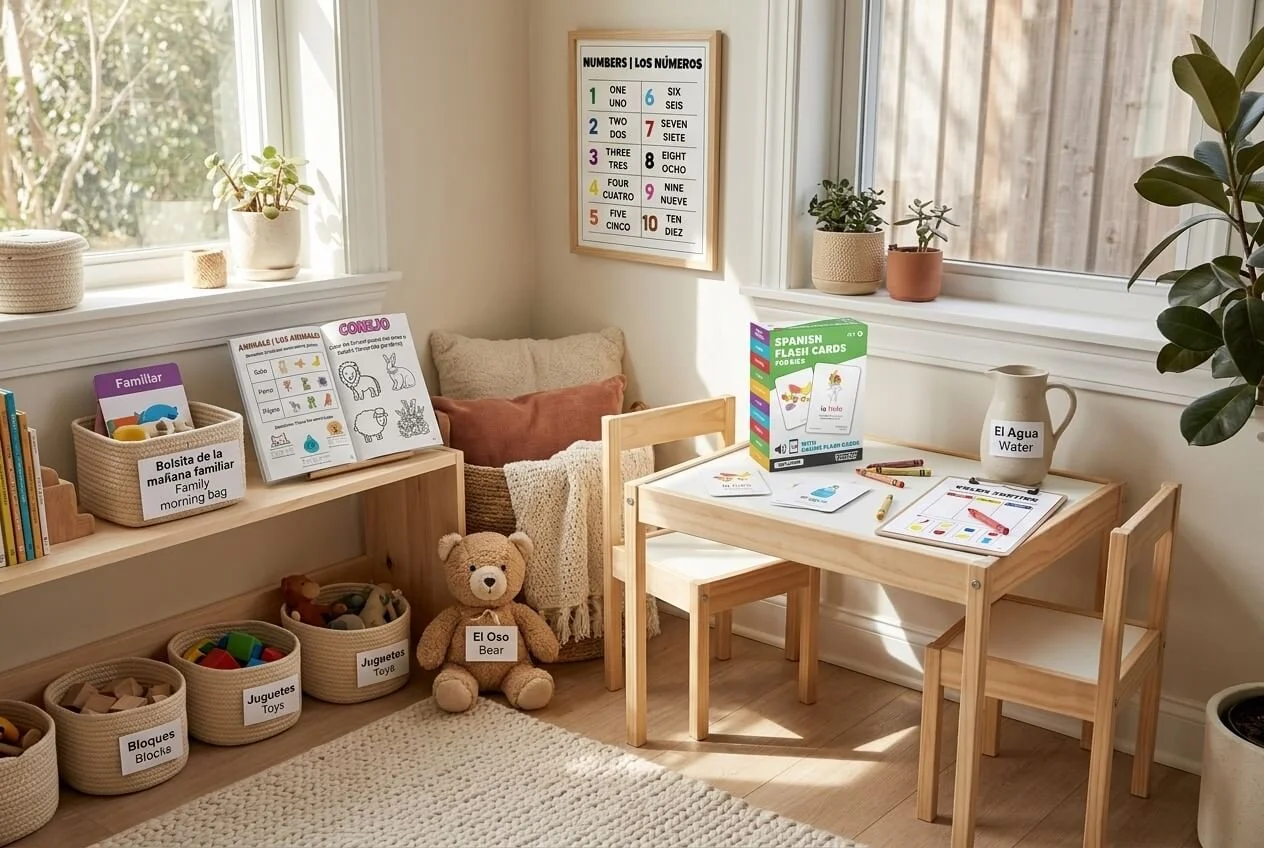
Label familiar objects around the house in Spanish.
Choose age-appropriate Spanish shows or educational videos occasionally.
Keep Spanish flashcards, puzzles, and activities available for independent play.
Use the Spanish phrases you've already introduced throughout the day.
You can even create a small Spanish learning corner in your home with books, worksheets, flashcards, and other activities your child enjoys.
And remember, you don't need to completely change your home or make everything bilingual overnight. Start with the resources you already have and gradually add more Spanish as you become comfortable.
The goal is to create an environment where Spanish feels familiar and accessible, not something your child only hears during a formal lesson. Little moments of exposure throughout the day can add up over time.
9. Don't Be Afraid to Make Mistakes
If you're still learning Spanish yourself, one of the most important things to remember is that you are allowed to make mistakes. You don't have to pronounce every word perfectly or know every Spanish phrase before you start speaking with your child.
It's easy to become afraid of saying something incorrectly, especially when you're still learning. But waiting until your Spanish is perfect can keep you from giving your child the exposure you're trying to create.
Instead, let your child see you learning, too.
If you don't know how to say something, look it up together. If you're unsure about pronunciation, listen to it and practice together. Turn mistakes into learning opportunities instead of reasons to stop.
You can even say:
"Let's learn this word together."
"I don't know how to say that yet. Let's look it up."
"Let's practice saying it together."
Your child doesn't need a perfect Spanish-speaking parent.
They need someone willing to keep using the language, keep learning, and keep encouraging them.
And remember that learning a language takes time. There will be days when your child remembers everything and days when they seem to forget it all. That's completely normal.
Don't let the fear of making mistakes prevent you from starting. Your willingness to learn Spanish alongside your child can actually become one of the most meaningful parts of your bilingual journey together.
10. Focus on Consistency, Not Perfection
When you're learning how to raise bilingual kids, it's easy to feel like you need to do everything perfectly. You might worry that you're not using enough Spanish, that your pronunciation isn't perfect, or that you're not doing enough structured activities. But consistency is much more important than perfection.
You don't need to spend hours teaching Spanish every day.
Instead, focus on creating small moments of Spanish throughout your child's week:
Read one Spanish book before bedtime.
Practice a few Spanish phrases during breakfast.
Listen to Spanish songs in the car.
Play a simple Spanish game together.
Use Spanish vocabulary during everyday activities.
Complete a Spanish worksheet together.
Some days you'll do more than others. That's okay.
There may be days when you're busy, tired, or simply don't have the time for a formal Spanish activity. Missing a day doesn't mean you've failed. Just pick it back up the next day.
The goal is to create consistent exposure over time, not to make every day a perfect Spanish lesson.
You don't have to be fluent. You don't need expensive resources. And you don't have to create a perfect bilingual environment overnight. Start small, keep going, and let Spanish become a natural part of your family's life.
Learn Spanish Together at Home
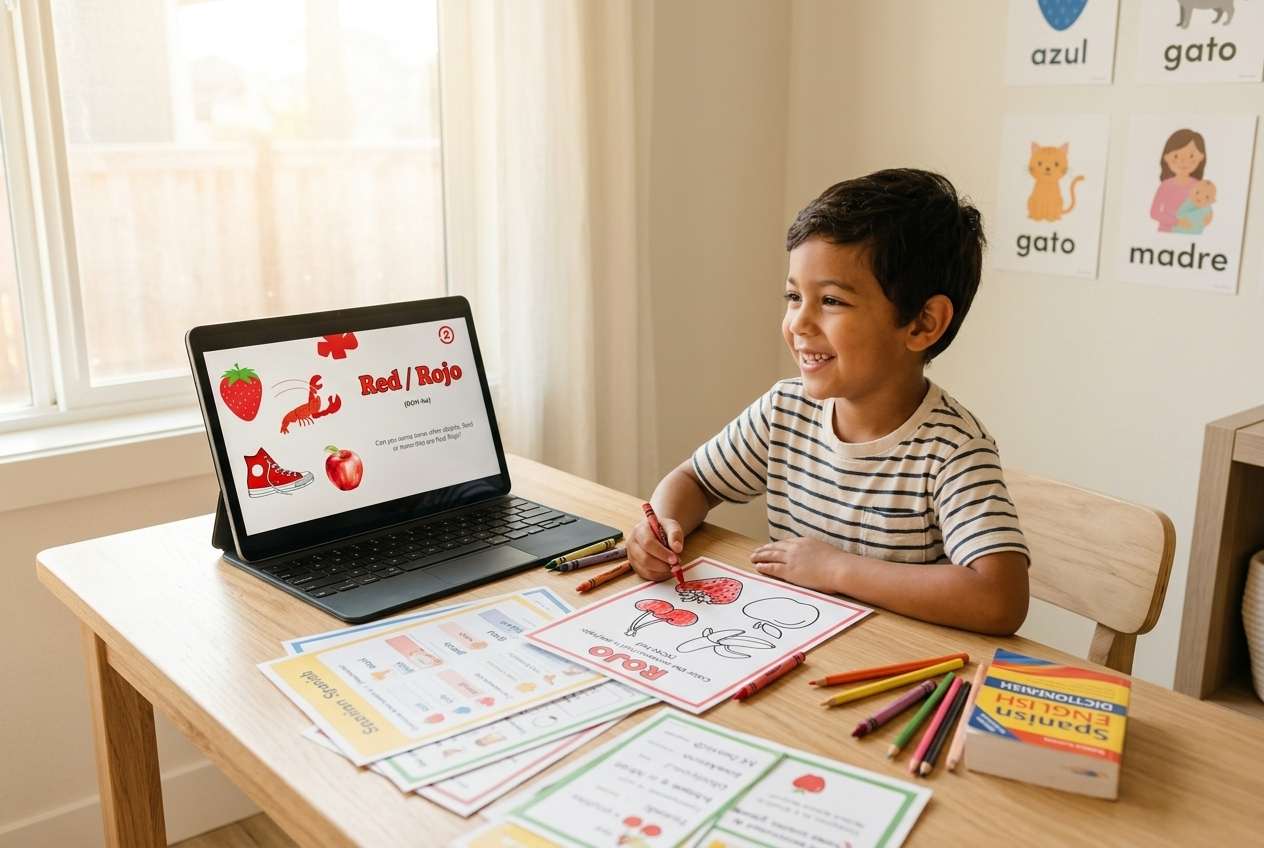
If you're ready to take the next step in raising bilingual kids but want a little more structure, I've created a Spanish course designed to help families learn Spanish together at home.
You don't need to be fluent to get started. The course gives you a simple way to practice Spanish with your child while building vocabulary, pronunciation, and confidence together.
What You'll Get
With the course, you'll have access to:
Spanish lessons you can work through together
Pronunciation practice to help you feel more confident speaking Spanish
Activities that make learning interactive and fun
100+ Spanish worksheets included FREE with your course purchase
A flexible learning experience you can use at home and fit into your family's routine
My goal is to make learning Spanish feel less overwhelming for parents and more enjoyable for kids. You don't have to know everything before you begin; you can learn together, practice together, and build Spanish into your everyday life one lesson at a time.
Ready to Start Learning Spanish Together?
If you've been wanting to introduce more Spanish into your child's life but weren't sure where to begin, this course can give you the structure and resources you need to get started.
Learn Spanish together at home and take the next step toward raising confident bilingual kids.
🎥 Start the Spanish course today and receive the Spanish worksheets FREE with your purchase!